
BY EMMA PETER, ABUJA
The Executive Chairman of Gwagwalada Area Council, Hon. Kasim Mohammed Ikwa, has appealed to farmers and herders in Paikon-Kore and neighbouring communities to embrace peace following a renewed clash that reportedly claimed three lives, injured several people and left shops, houses and motorcycles burnt.
Oxford Reporters has learnt that the conflict began on Saturday afternoon and continued until Sunday morning following a disagreement over cattle allegedly straying into a farm. The confrontation reportedly escalated into violence, resulting in fatalities, injuries and the destruction of properties.
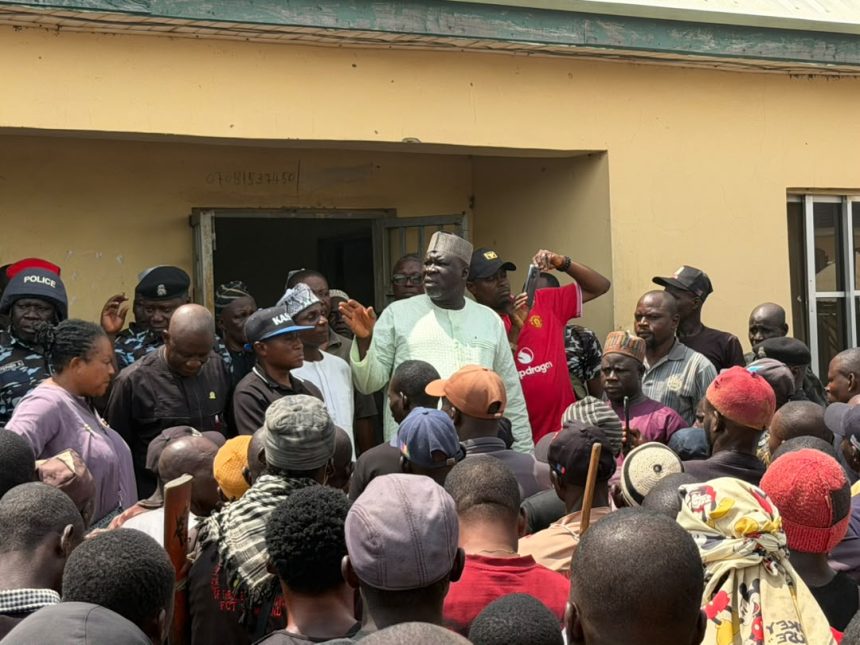
Reacting to the development, Ikwa swung into action on Sunday, visiting the affected community alongside security operatives to assess the situation and appeal to both parties to end hostilities.
According to a press statement and footage released by the council’s Senior Special Assistant on Media and Publicity, Muhammad Isah Hassan, on October 18, 2026, the chairman condoled with the farming and Fulani communities over the incident and urged them to avoid actions capable of worsening the crisis.
The chairman, as quoted in the statement, stressed that peace was essential for development and called on youths in Paiko to exercise restraint, protect the reputation of their community and avoid confrontation or retaliatory attacks.
He advised farmers whose crops were damaged by cattle to report such incidents to the appropriate security agencies rather than resorting to self-help, warning that the consequences of communal violence often affect innocent people who may not know the circumstances that triggered the dispute.
Ikwa also urged residents to cooperate with security personnel deployed to the area. As part of measures to contain the situation, he announced a temporary restriction of movement and the deployment of additional security personnel to maintain order.
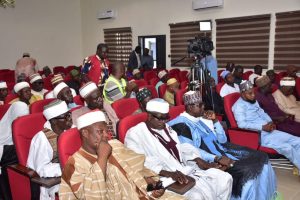
In a further effort to restore calm, the chairman convened an enlarged security meeting on Monday, October 19, bringing together community leaders, stakeholders and security agencies to address the recurring farmers-herders clashes.
Speaking at the meeting, Ikwa expressed disappointment that violence had continued despite previous peace agreements, insisting that both parties could not continue fighting at the expense of human lives, livelihoods and community development.
He lamented that while many residents were struggling to provide food for their families and pay their children’s school fees, others had been left grieving, injured or living in fear because of the recurring crisis.
The chairman also expressed concern that the clashes had damaged Gwagwalada’s reputation, attributing the continued violence partly to impatience, greed and the failure of some individuals to honour agreements reached during previous peace meetings.
He recalled that stakeholders had met barely six weeks earlier and agreed to report grievances to the appropriate authorities rather than resort to violence. However, he regretted that the agreement had failed to prevent another outbreak of hostilities.
According to the chairman, farmers and herders were brothers who had coexisted and supported one another for years, and disagreements should not be allowed to destroy their longstanding relationships.
He maintained that criticism and insults from both sides would not deter him from pursuing peace, adding that his commitment to peaceful coexistence remained firm.
Ikwa disclosed that he had directed the Gbari Forum and the Fulani Forum to organise separate meetings with their respective members to address the crisis and ensure that the resolutions reached were implemented at the grassroots.
He charged community representatives to take the message of peace to their respective communities, particularly the youths, urging them to exercise restraint and recognise their shared responsibility in preventing further violence.
The chairman warned that the Monday meeting must mark a turning point in addressing the crisis, declaring that he would no longer tolerate the recurring pattern of violence. He disclosed that he had spent more than ₦5 million on hospital bills arising from previous incidents, adding that he would not continue to bear similar expenses while the parties disregarded repeated appeals for peace.
He stressed that anyone found responsible for criminal acts must face the law, irrespective of whether the person was a farmer or a herder.

In their remarks, security agencies expressed concern that resolutions reached at previous meetings had not been effectively implemented by community leaders. They also criticised the reluctance of some leaders to confront youths involved in the crisis, warning that such attitudes could undermine efforts to restore lasting peace.
The Director of Security, Federal Capital Development Authority (FCDA), Adamu Buba Gwery, said the recurring disputes had contributed to Gwagwalada’s reputation as a troubled area, noting that many disagreements could be resolved through timely intervention and dialogue.
Gwery further disclosed that the FCT Minister had directed security agencies to investigate the incident and ensure that anyone found culpable was brought to book without fear or favour.
He emphasised that the directive would be implemented impartially, stressing that nobody involved in the crisis would be shielded from the law.
The latest violence has renewed concerns over recurring disputes between farmers and herders in parts of Gwagwalada, particularly disagreements involving cattle grazing and the destruction of crops.
Ikwa urged traditional rulers, youth leaders, farmers, herders and other stakeholders to support ongoing peace efforts, resolve grievances through lawful channels and cooperate with security agencies.
He maintained that lasting peace could only be achieved through mutual understanding, accountability and respect for one another’s rights, adding that the future and development of Gwagwalada depended on the collective commitment of residents to peaceful coexistence.