
By Emma Peter, Abuja
Former Labour Party presidential candidate, Peter Obi, has called for greater support for rural women in Nigeria, highlighting the economic challenges they face and the need for improved access to credit, water, healthcare and other essential services.
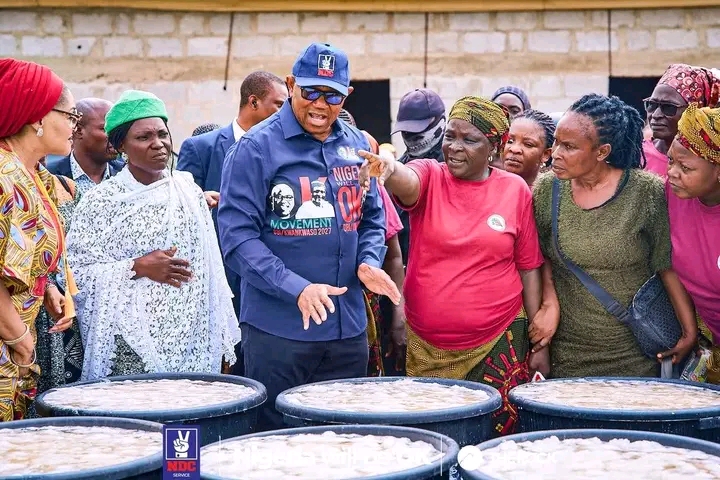
Obi made the call on Thursday, October 15, 2026, to commemorate the International Day of Rural Women, during which he visited members of the Akpu Sellers Association at their markets in Sheda and Sheda Galadima, within the Kwali Area Council of the Federal Capital Territory (FCT).
He said the visit was aimed at gaining firsthand knowledge of the women’s daily experiences, business challenges and living conditions.
According to him, the women raised concerns about worsening economic hardship, declining customer patronage, inadequate water supply and the need for microcredit facilities to strengthen their businesses.
Obi said he assured them that his government remained committed to supporting rural women, other vulnerable groups and Nigerians generally.
He emphasised that supporting rural enterprises would be a priority, noting that empowering small business owners was essential to his commitment to lifting Nigerians out of poverty.
The former Anambra State governor paid tribute to millions of Nigerian women in rural communities who contribute to agriculture, food production, family welfare and the growth of local economies despite the challenges they face.
He, however, expressed concern that rural women continued to experience neglect, insecurity, rising poverty, limited access to credit facilities and inadequate healthcare services.
Obi said his solidarity with rural women reflected his commitment to building a Nigeria where people who sustain the nation’s economy could prosper, while rural communities received the investments and attention they deserved.
He stressed that a new Nigeria must guarantee rural women access to opportunities, resources and essential services, regardless of where they live.
The former presidential candidate also commended rural women for their resilience in the face of economic pressures, which he attributed to what he described as poor government policies, incompetence and the mismanagement of national resources.
He concluded by expressing optimism about Nigeria’s future, declaring that a new Nigeria was possible and that the country would be fine.