

BY EMMA PETER, ABUJA
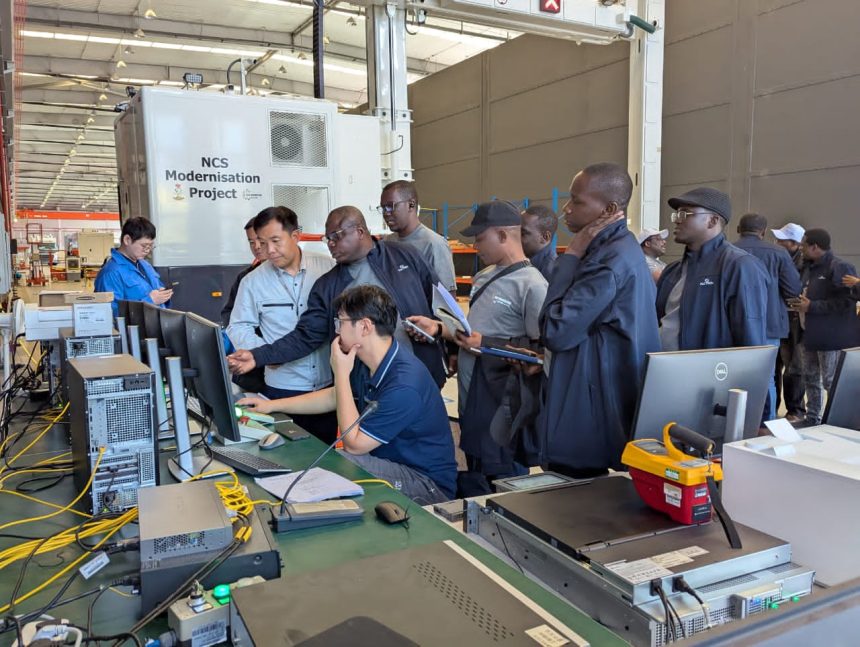
The Nigeria Customs Service (NCS), in collaboration with Trade Modernisation Project Limited (TMPL), has completed a Factory Acceptance Test (FAT) for newly acquired cargo scanning equipment and an Electronic Cargo Tracking System (ECTS) in China ahead of their deployment in Nigeria.
The two-week exercise, conducted from October 9 to 20, 2026, took place at the facility of Nuctech Company Limited, the manufacturer of the equipment. The delegation was led by the Deputy Comptroller-General of Customs in charge of Information Communication and Technology/Modernisation, Oluyomi Adebakin.
The exercise involved comprehensive technical assessments to verify that the Non-Intrusive Inspection (NII) scanners and Electronic Cargo Tracking System met contractual specifications and international operational standards before shipment to Nigeria.
The two technologies are designed to complement each other by improving cargo examination, strengthening monitoring capabilities and enabling real-time tracking of consignments from ports to their final destinations.
Speaking during the exercise, Adebakin reaffirmed the commitment of the Comptroller-General of Customs, Adewale Adeniyi, to leveraging technology to facilitate legitimate trade, improve revenue collection and strengthen national security.
She explained that the factory acceptance test was a crucial quality assurance process to ensure the equipment met the required performance standards and was suitable for operational deployment.
According to her, the Customs Service is committed to introducing advanced technology that will accelerate cargo clearance, reduce delays and improve the detection of concealed and prohibited goods.
“The Nigeria Customs Service, under the leadership of CGC Adeniyi, is committed to ensuring that we deploy only cutting-edge, fit-for-purpose technology that will fast-track cargo examination, reduce dwell time, and enhance our ability to detect concealments and prohibited items, improve revenue generation, as well as facilitate legitimate trade,” Adebakin said.
The Acting Comptroller of Non-Intrusive Inspection, Deputy Comptroller of Customs Umar Madugu, said the deployment of the scanners and electronic tracking system would significantly reduce the need for 100 per cent physical examination of cargo.
He added that the technology would minimise human contact during inspections, discourage cargo diversion and improve operational efficiency across Customs formations.
Representing TMPL, the company’s General Manager, Bamidele Chinedu, described the successful completion of the factory acceptance test as a significant milestone in implementing the Trade Modernisation Project.
Chinedu noted that integrating non-intrusive inspection scanners with the Electronic Cargo Tracking System was central to establishing a transparent, efficient and technology-driven Customs administration.
Also speaking, Niu Chao, Project Manager at Nuctech Company Limited, reaffirmed the manufacturer’s commitment to providing world-class equipment, technical support, capacity building and after-sales services.
As part of the exercise, technical experts from the Nigeria Customs Service and TMPL received training on operating, handling and maintaining the scanners and electronic tracking system.
The training is expected to equip Nigerian personnel with the technical expertise required to manage the equipment effectively, ensure seamless deployment and support its long-term sustainability.
The initiative represents another step in the modernisation of Customs operations, with the anticipated benefits of improved cargo control, faster clearance procedures, enhanced revenue assurance and stronger national security.