
BY EMMA PETER, ABUJA
The Federal Government has warned that any attempt to return to petrol subsidy could push the price of Premium Motor Spirit (PMS) to at least N2,000 per litre and weaken the naira to about N3,000 to the United States dollar within months.
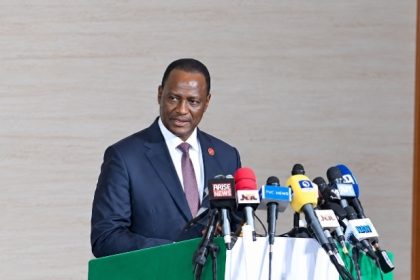
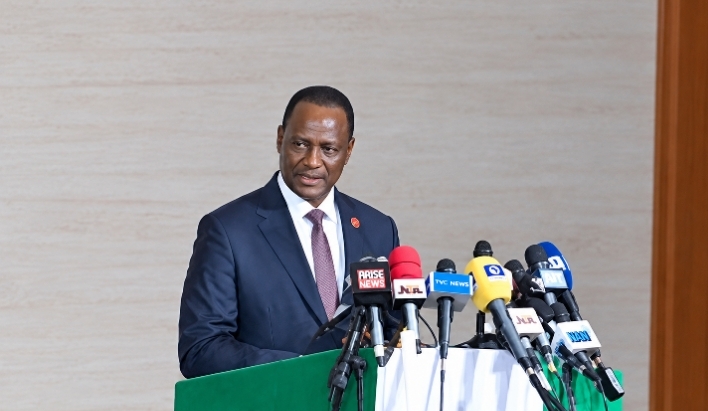
The Minister of Finance and Coordinating Minister of the Economy, Professor Taiwo Oyedele, gave the warning on Thursday in Abuja during a press briefing on “Fuel Prices and the Subsidy Question.”
Oyedele said restoring subsidy would reduce government revenue, increase borrowing costs, weaken foreign exchange reserves and potentially reverse recent progress on inflation and interest rates.
According to him, the government was aware of the hardship being experienced by Nigerians as a result of rising fuel, transportation and logistics costs, but maintained that returning to subsidy would provide only temporary relief while creating deeper economic problems.
“Return subsidy, and the sequence is familiar. Weaker revenues invite a sovereign credit downgrade. Borrowing becomes costlier. Capital leaves. Reserves fall. The naira weakens,” Oyedele said.
He added that the government’s estimate showed that the exchange rate could approach N3,000 per dollar within months, while subsidised petrol could cost at least N2,000 per litre.
“A subsidy does not lower the cost of fuel. It only changes how it is paid and when. Nigerians have paid that bill before in scarcity, in inflation and in a collapsing currency,” he said.
The minister said the current increase in petrol prices was largely linked to global developments, including disruptions to crude oil and refined petroleum product supplies.
He explained that crude oil, freight and refining inputs were priced in dollars, making the exchange rate a major factor in determining domestic petrol prices.
Oyedele said petrol, which sold for about N830 per litre before the latest global shock, now averages around N1,400 per litre.
He argued that without the removal of subsidy, the impact of the global price shock would have been considerably worse.
The minister also warned that subsidised petrol could encourage excessive domestic consumption and smuggling into neighbouring countries, thereby placing additional pressure on government finances.
Nigeria currently consumes about 50 million litres of petrol daily, he said, adding that cheaper petrol could push consumption significantly higher at a time of tight global supply.
Oyedele said subsidy removal had also increased allocations to states and local governments, noting that N15.8 trillion was released to the Federation Account between June 2023 and December 2025 following the removal of subsidy.
He said N10.4 trillion of the amount went to states and local governments.
According to him, while 27 states were unable to reliably pay salaries in May 2023, saying the current administration has changed the narrative.
The minister said the Federal Government had also deployed part of the savings from the reform to higher wages, infrastructure, electricity support and social transfers.
He maintained that macroeconomic reforms were directly connected to the welfare of ordinary Nigerians.
“When inflation goes up, that’s macro. It shows up in the price of bread on the dining table. That’s micro. So they are not disconnected,” Oyedele said.
He likened economic reforms to laying the foundation of a house, arguing that abandoning the foundation in search of immediate results could undermine long-term stability.
Oyedele, however, said the government was not ignoring the hardship caused by higher fuel prices.
He announced a 30-day discount on petrol sold by the Nigerian National Petroleum Company Limited (NNPCL), with priority given to public transporters nationwide.
He stressed that the arrangement should not be regarded as a return to subsidy.
“We are offering a discount on petrol dispensed by NNPC Limited for the next 30 days in the first instance, with priority for public transporters nationwide. So, it’s not a subsidy; government is just saying we sell to you at cost,” he said.
The government is also negotiating a N1,350 per litre ceiling on the ex-gantry or landing cost of petrol under a proposed price-modulation mechanism designed to reduce sudden fluctuations in pump prices.
Oyedele said the arrangement would require refiners and importers to absorb temporary increases above the ceiling and recover the difference when market conditions improve.
He stressed that the mechanism was neither subsidy nor price control, but an attempt to make fuel prices more predictable.
Other measures outlined by the government include increased cash transfers to vulnerable households, subsidised credit for small businesses and consumers, faster deployment of Compressed Natural Gas (CNG) vehicles, stronger regulatory oversight, consideration of an excess-profit tax and the establishment of a National Strategic Fuel Reserve.
Earlier, the Permanent Secretary in the Federal Ministry of Finance, Mr. Raymond Omachi, in his welcome address, said the engagement was designed to examine how government interacts with businesses and citizens and how such interactions could become more productive, predictable and responsive.
He said the theme, “From Gatekeeper to Enabler,” captured the transformation agenda being pursued by the government.
According to him, regulation, accountability and controls remained necessary, but regulation should not become an obstacle to the economic activities government was seeking to promote.
He called for the reduction of duplication among government agencies, particularly where businesses are required to obtain multiple approvals for simple processes.
The Permanent Secretary also stressed the need for timely, clear and coordinated communication whenever government introduced new policies.
He said the engagement would provide an opportunity for government agencies and representatives of the business community to discuss overlapping mandates, compliance, governance, budgeting, fiscal accountability and remittances.
He urged participants to speak frankly and constructively, stressing that the objective was not to assign blame but to identify what was not working and agree on practical changes, responsibilities and timelines.
He expressed confidence that the engagement would produce practical outcomes that could be translated into concrete action beyond the meeting.
Oyedele, meanwhile, said the Federal Government remained open to alternative proposals on petrol pricing and subsidy, but challenged proponents of subsidy restoration to provide the financial arithmetic behind their proposals.
“We remain open to ideas, but any credible proposal should answer three questions: what will it cost? How will it be funded sustainably? What pump price will it deliver?” he said.
The minister said the government would engage any credible proposal that could demonstrate how it would provide relief without undermining the country’s fiscal and monetary stability.