
By Oxford Reporters
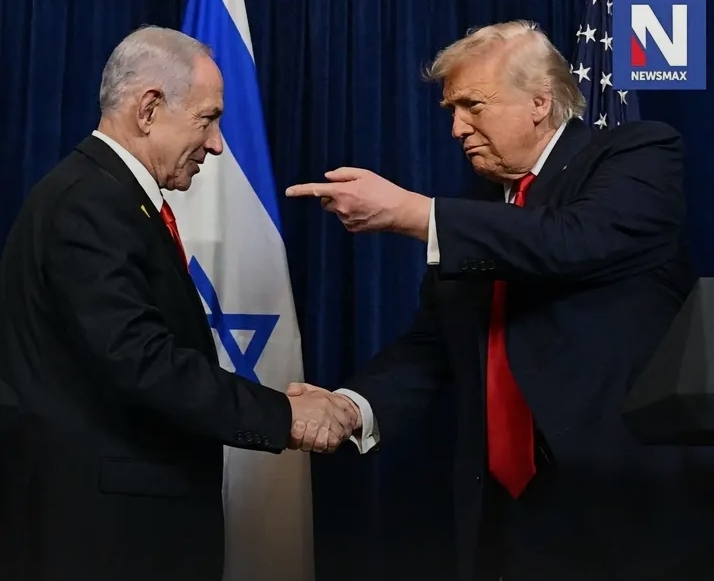
United States President Donald Trump has thrown his support behind Israeli Prime Minister Benjamin Netanyahu ahead of Israel’s October 27 election, ending weeks of uncertainty over his position as tensions between the two leaders continue to emerge over the Iran war and wider Middle East security.
Trump announced his endorsement in a social media post, describing Netanyahu as a “Great Warrior Prime Minister” and declaring his “Complete and Total Endorsement” of the Israeli leader, popularly known as Bibi.
Netanyahu quickly welcomed the announcement, thanking the American president for what he described as “tremendous support and the joint work.”
The endorsement comes at a critical time for Netanyahu, whose political future faces uncertainty as voters prepare to decide whether to give him another mandate.
For years, Trump has been an influential figure in Netanyahu’s political campaigns, with their relationship often presented as evidence of strong ties between Washington and Jerusalem.
During the 2019 Israeli election campaign, Trump recognised Israeli sovereignty over the occupied Golan Heights. In January 2020, he also unveiled his administration’s Israeli-Palestinian peace proposal alongside Netanyahu, reinforcing the perception of a close political partnership between the two leaders.
However, their relationship has become increasingly complicated over the past year, particularly over Israel’s military operations in the region and disagreements surrounding diplomatic efforts to resolve the conflict with Iran.
Trump had reportedly expressed frustration with Netanyahu over Israeli strikes in Lebanon and Gaza, as well as concerns that the conflict with Iran could damage the global economy and undermine American interests.
Some officials within the Trump administration reportedly believed Netanyahu’s military decisions were influenced, in part, by domestic political considerations ahead of the Israeli election.
The American president had previously avoided publicly endorsing Netanyahu, raising questions about whether he intended to intervene in the Israeli electoral contest.
Earlier in October, Trump told Time magazine that he was no longer involved in Israeli politics. In a subsequent interview with Newsmax, he acknowledged that Netanyahu wanted him to participate in the election but stopped short of offering his support.
When asked whether he trusted Netanyahu, Trump responded, “I don’t trust anybody in the world of politics.”
His hesitation also appeared to reflect concerns about Netanyahu’s electoral prospects. According to people familiar with their discussions, Trump had questioned the Israeli prime minister about his political standing as his support came under pressure.
Meanwhile, Trump’s own popularity in Israel has reportedly weakened, particularly among right-wing voters dissatisfied with the ceasefire agreement and subsequent diplomatic arrangements involving Iran.
A July survey by the Jewish People Policy Institute found that only seven per cent of Israelis had “a great deal of trust” that Trump would do the right thing regarding US-Israel relations, while 45 per cent expressed no trust in his handling of the relationship.
The figures suggest that Trump’s endorsement may not carry the same political weight in Israel that it once did.
Netanyahu had previously hoped to make his relationship with Trump a central feature of his campaign. In December 2025, the Israeli prime minister announced that Trump would become the first non-Israeli recipient of the Israel Prize, with expectations that the American president would attend the award ceremony in April.
However, Trump did not attend the ceremony, and relations faced further pressure following the joint US-Israeli military campaign against Iran, which began on February 28, 2026.
Although the fighting later ended with a ceasefire and a subsequent memorandum of understanding, the agreement proved unpopular among sections of the Israeli public, particularly right-wing voters who considered it insufficient.
Trump has also faced growing criticism within the United States over the war. Data cited in recent polling showed a substantial deterioration in American attitudes towards Israel, with its average net favourability falling from plus 51 points in July 2018 to minus 16 points in July 2026.
Against this backdrop, Trump has reportedly sought to distance himself from the perception that Netanyahu influenced his decision to become involved in the conflict with Iran.
Despite the apparent tensions, however, the two leaders may still share important strategic interests.
Israeli sources have indicated that Trump and Netanyahu recently discussed the possibility of renewed military strikes against Iran. Israeli security sources have also indicated that preparations for possible further action were underway, although any decision would depend on the American president.
Netanyahu has rejected suggestions that he wants the conflict to escalate before the election, arguing that renewed hostilities would create additional difficulties for Israel.
Speaking to Army Radio, he said further Iranian missile attacks would not be convenient for Israel and warned that his political opponents would blame him if the country came under renewed attack.
Trump’s endorsement could provide Netanyahu with an important political boost as election day approaches. However, the extent to which it will influence voters remains uncertain, particularly amid concerns over the war, regional security and the future of relations between Washington and Jerusalem.
As Israel prepares for the October 27 election, Netanyahu faces the challenge of convincing voters that his leadership can deliver security and stability while managing a complicated relationship with an American president whose support, although significant, has become less predictable.
For Trump, the endorsement represents a renewed public show of support for a longstanding ally, even as disagreements over military strategy and diplomacy continue to test their relationship.