

By Oxford Reporters
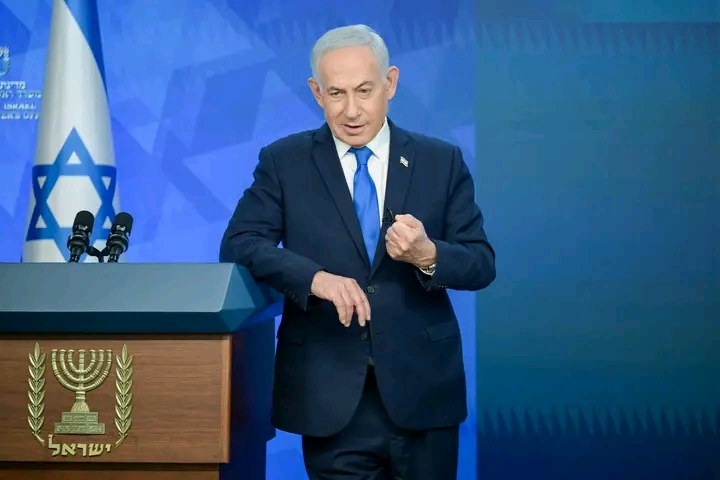
Israeli Prime Minister Benjamin Netanyahu has unveiled a revised national security doctrine that prioritises pre-emptive military action, technological superiority, domestic defence and greater independence in weapons production, following the security challenges triggered by the October 7, 2023, attack on Israel.
The Prime Minister’s Office disclosed this in a statement announcing the new security framework, which was formulated with the assistance of Israel’s National Security Council (NSC) and its director, Shmuel Ben Ezra.
According to the Prime Minister’s Office, the October 7 attack compelled Israel to wage an extensive war across multiple fronts, including Gaza, Lebanon, Yemen and Iran, prompting a reassessment of the country’s traditional national security principles.
Netanyahu said the military campaigns helped Israel confront what he described as an imminent existential nuclear threat and weaken the influence of the Iranian axis in the region.
He also commended the government and Security Cabinet for their decisions during the conflict, praising the Israel Defense Forces (IDF) and other security agencies for their military operations. He further acknowledged the resilience of Israeli civilians throughout the hostilities.
Describing the conflict as the “War of Redemption,” Netanyahu said the experience had necessitated an upgrade of fundamental principles guiding Israel’s national security doctrine.
One of the central changes is a shift towards prevention and offensive operations rather than relying primarily on containment and defensive measures.
The revised doctrine places greater emphasis on pre-emptive strikes to thwart emerging threats before they develop into more serious security challenges.
The framework also prioritises strengthening Israel’s domestic defences against evolving threats, particularly those capable of endangering civilians and critical infrastructure during military confrontations.
Another key objective is to consolidate Israel’s position as a regional power, reflecting the government’s intention to strengthen its military capabilities and strategic influence across the Middle East.
The Prime Minister’s Office said the doctrine also seeks to achieve maximum independence in ammunition production and supply, an objective intended to strengthen Israel’s ability to sustain military operations without excessive reliance on external suppliers.
Maintaining superiority in advanced technologies is another major pillar of the strategy, with technological development expected to remain central to Israel’s long-term defence capabilities.
The doctrine equally identifies intensified efforts against global antisemitism as a priority, extending the security framework beyond conventional military operations.
Despite the emphasis on military preparedness, Netanyahu said the conflicts had also created opportunities for Israel to establish new alliances within the region and beyond.
The proposed partnerships could complement Israel’s military strategy while expanding its diplomatic and strategic relationships internationally.
The revised doctrine comes amid continuing security concerns across the Middle East, where tensions involving Israel, Iran and armed groups operating in the region have heightened concerns about regional stability.
The Prime Minister’s Office said the security doctrine was developed with the assistance of the National Security Council under the leadership of its director, Shmuel Ben Ezra.