
BY EMMA PETER, ABUJA
The Director-General of the City Boy Movement, Hon. Francis Oluwatosin Shoga, has urged Nigerian youths to take advantage of government initiatives in technical and vocational education, skills acquisition and apprenticeship programmes to improve their economic prospects and contribute meaningfully to national development.
Shoga said acquiring practical skills was essential to preparing young Nigerians for the demands of the modern economy, stressing that youths must move beyond complaints and actively seek opportunities capable of improving their livelihoods.
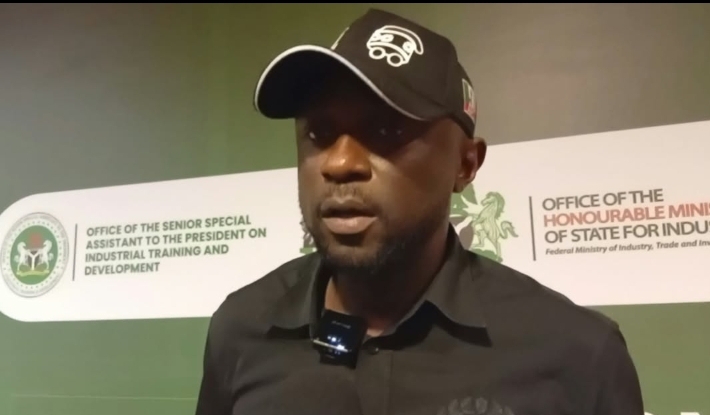
He made the call while speaking with journalists at the Banquet Hall, State House, Abuja, on the sidelines of the National Industrial Manpower Summit (NIMS 2026).
The summit brought together stakeholders to deliberate on manpower development, industrial training, skills acquisition and strategies for unlocking Nigeria’s human capital potential as part of efforts to accelerate economic growth and industrial transformation.
Shoga observed that many young Nigerians were unaware of the policies, programmes and initiatives introduced by the government to support their development, noting that inadequate awareness had prevented some eligible citizens from benefiting from available opportunities.
According to him, the City Boy Movement was working to bridge the gap between the government and the people by creating awareness about initiatives that could empower young Nigerians and prepare them for a productive future.
“Our message to Nigerian youths is for them to get involved. There are a lot of policies and initiatives of government that are unknown to a lot of young Nigerians,” he said.
He noted that while many Nigerians expressed concerns about the country’s economic situation and government policies, there was a need to ensure that young people were adequately informed about programmes designed to improve their skills, employability and economic opportunities.
The City Boy Movement DG explained that the movement was committed to encouraging young Nigerians to participate in government-supported initiatives, particularly those focused on technical and vocational education, practical training and the acquisition of relevant professional skills.
He said the ongoing National Industrial Manpower Summit provided an opportunity to showcase training programmes and other initiatives capable of helping young Nigerians develop competencies needed in different sectors of the economy.
“Today, they showcased a lot of ongoing trainings that can develop their skills. So, people that are sitting at the sideline should make sure that they are involved so that they can position themselves for a better future for Nigeria,” Shoga said.
He urged young people to recognise that skills development could open doors to employment, entrepreneurship and self-reliance, adding that participation in training and apprenticeship programmes could help them become productive members of society.
Shoga’s remarks underscored the importance of technical and vocational education and training (TVET) in addressing the skills gap and preparing young people for opportunities in manufacturing, construction, agriculture, technology, engineering and other productive sectors.
He encouraged youths to explore practical learning opportunities rather than depend exclusively on conventional routes to employment, noting that technical competence and vocational expertise could provide pathways to sustainable livelihoods.
According to him, effective youth empowerment requires collaboration between the government, training institutions, industry operators and other relevant stakeholders to ensure that young people acquire skills that correspond with the needs of the labour market.
He stressed that connecting young Nigerians to available programmes was particularly important in an economy where employers increasingly require practical competencies, technical knowledge and the ability to adapt to changing industrial demands.
The City Boy Movement, he added, was committed to ensuring that young people were better informed about opportunities that could help them improve their circumstances and contribute to national progress.
Earlier in his address, Shoga described human capital as Nigeria’s greatest asset, arguing that the country’s long-term development depended largely on the ability to identify, nurture and empower the talents of its citizens.
He said investment in young people remained one of the most important investments the country could make, given their potential to drive innovation, expand businesses, strengthen local industries and shape the nation’s future.
“I firmly believe that the greatest asset of any nation is its people, and that the greatest investment we can make is the future of our youth,” he said.
Shoga maintained that young Nigerians needed access to meaningful skills, resources and opportunities to enable them to realise their potential and assume leadership responsibilities in the future.
He encouraged them to believe in their abilities and remain determined to achieve their aspirations, stressing that personal development, hard work and participation in available opportunities were important to achieving success.
To achieve sustainable economic development, he said Nigeria must create an environment where talent was nurtured, innovation was encouraged, local industries were supported and every young person had a fair opportunity to pursue their ambitions.
He further called for a collective commitment to building an economy in which young people could transform their knowledge and skills into productive ventures, employment opportunities and solutions to societal challenges.
According to Shoga, youth empowerment should go beyond public declarations and translate into practical programmes that equip young people with the capabilities required to compete in an increasingly demanding economic environment.
“Let us therefore look beyond words. Let us take action,” he urged.
He expressed confidence that young Nigerians could achieve their ambitions with the right opportunities, determination and support, while expressing optimism about the potential of the administration of President Bola Ahmed Tinubu to advance youth development and economic empowerment.
“My young Nigerians, the sky is the limit, and I believe with this government, government of President Bola Ahmed Tinubu, we can achieve, we can be whatever we want to be,” he said.
Shoga called on young Nigerians to take responsibility for their personal development by seeking relevant information, participating in training opportunities and acquiring skills that would enable them to contribute to the country’s economic growth.
He reiterated that empowering young people was fundamental to building a stronger, more inclusive and prosperous Nigeria, adding that a skilled and productive youth population could play a significant role in driving industrialisation and national development.
The summit’s focus on industrial manpower development also highlighted the need to align training programmes with the requirements of employers and emerging industries, ensuring that skills acquired by young Nigerians translate into meaningful economic opportunities.
For Nigeria to maximise the potential of its youthful population, stakeholders must continue to promote accessible training, strengthen apprenticeship systems, support technical education and encourage partnerships between training providers and industries.
Shoga’s appeal therefore placed renewed emphasis on the need for young Nigerians to take advantage of available opportunities while urging stakeholders to strengthen awareness and access to programmes that can help transform the country’s human capital into a driver of sustainable economic growth.
He concluded by calling for continued commitment to youth development and national progress, expressing hope for a future in which Nigerian youths would have the skills, confidence and opportunities to achieve their aspirations.
He wished Nigerian youths well and prayed for the continued progress of the Federal Republic of Nigeria.