
By Oxford Reporters
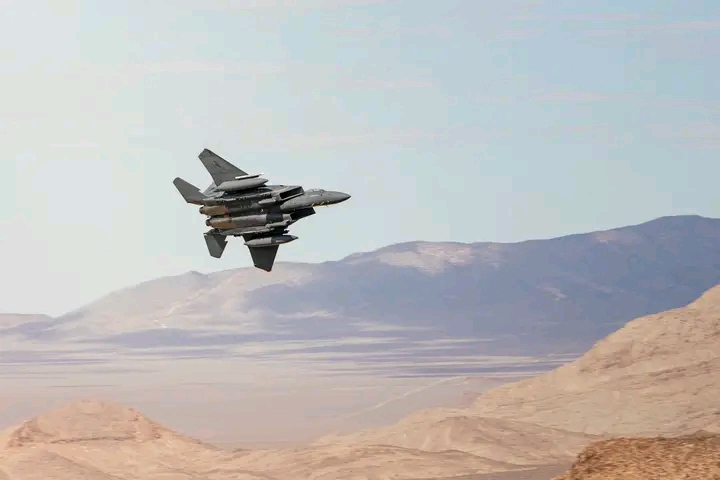
The United States military has developed new plans that could involve deploying its largest non-nuclear bomb against Iranian energy infrastructure and nuclear facilities if President Donald Trump orders a resumption of combat operations, according to a CNN exclusive report.
The report, citing multiple US officials familiar with internal military planning, said the proposed options include the use of the GBU-43/B Massive Ordnance Air Blast (MOAB), popularly known as the “Mother of All Bombs.”
According to CNN’s exclusive report, the potential deployment would represent a significant escalation in the conflict, although questions remain about whether the weapon could achieve Washington’s strategic objectives or force Tehran to make concessions.
The development comes amid growing pressure on Trump to end the war, which has become increasingly unpopular among Americans, as Republicans prepare for potential political repercussions ahead of the forthcoming US midterm elections.
CNN reported that senior White House officials and military planners have been examining different options for Iran in recent weeks, including strikes on energy infrastructure and suspected nuclear facilities, as the administration seeks a possible exit strategy from the conflict.
One of the sources cited in the report said Trump had directed the military to develop additional strike packages against Iranian targets, including options involving the MOAB, before a possible withdrawal of US forces from the region.
Another source told CNN that military plans targeting Iranian nuclear facilities, including the suspected underground site known as Pickaxe Mountain, also explicitly considered the use of the bomb.
The United States and Israel suspect that Iran has stored components of its nuclear programme at the site. Trump has repeatedly maintained that preventing Iran from acquiring a nuclear weapon remains a central objective of his administration.
However, military officials and sources familiar with the planning have expressed doubts about the MOAB’s effectiveness against deeply buried nuclear installations.
Although the weapon can devastate a large area at the surface, its design does not provide the deep-earth penetration required to reliably destroy heavily fortified underground facilities, according to the report.
The MOAB weighs approximately 21,600 pounds and is the largest conventional bomb in the US arsenal. It is designed to produce an enormous blast capable of destroying targets across a wide area.
A source familiar with the military discussions described the weapon as more suitable for large-area destruction and psychological impact than for penetrating deeply buried targets.
The report also warned that deploying the bomb against energy infrastructure near populated areas could raise serious concerns about civilian casualties and damage to non-military facilities.
Despite these limitations, CNN reported that the weapon could be considered for its psychological impact, particularly as Washington searches for ways to pressure Tehran without necessarily restarting a full-scale military campaign.
Trump, speaking during an interview with Newsmax on Thursday, described the MOAB as an extremely large conventional bomb and stressed that it was not a nuclear weapon.
He said the United States would not need to use nuclear weapons to achieve its objectives.
According to CNN, administration officials have also explored ways to secure what could be presented domestically as a symbolic victory, allowing Trump to announce progress while preserving the possibility of a diplomatic settlement.
One option under consideration involves reaching an agreement to reopen the Strait of Hormuz, a strategically important waterway for global energy shipments.
The report further indicated that some military planners had developed strike options intended to demonstrate US military strength and potentially provide the president with a way to disengage from the conflict, even if the attacks did not accomplish all his stated objectives.
Meanwhile, Trump has expressed little interest in deploying American ground troops into Iran, amid concerns that a major ground operation could result in substantial US casualties.
Although military planners have considered a wide range of scenarios, CNN reported that no one within the administration was advocating such a drastic operation at the time of its report.
The US military is also reportedly preparing for possible Iranian retaliation should Trump authorise additional strikes. The report added that the next rotation of American troops deployed under the US Central Command, which oversees military operations across the region, is expected within weeks.
Responding to CNN’s questions, a White House official said the administration would not comment on sensitive military plans that may or may not exist, while reiterating that Trump was keeping all options open to prevent Iran from obtaining a nuclear weapon.
A Pentagon official similarly said the Department of War plans for a wide range of operational scenarios to implement presidential and senior defence leadership directives.
The MOAB was first used in combat in April 2017, during Trump’s first presidential term, when the United States deployed it against Islamic State positions in Afghanistan.
Afghan officials said the strike killed 36 Islamic State fighters and destroyed several underground tunnels, weapons and ammunition. Officials reported no civilian casualties at the time.
Developed during the Iraq War, the weapon was initially conceived partly for its psychological effect, with military planners hoping its enormous blast would intimidate opposing forces and encourage them to surrender.
CNN’s report, however, noted that the possible use of the bomb against Iran remains an option under consideration and does not amount to a confirmed decision by Trump to authorise the strike.
The prospect of further military action underscores the challenges facing Washington as it seeks to pressure Tehran, address concerns over Iran’s nuclear programme and find a way to end a conflict that has generated significant political and strategic difficulties for the US administration.