By Emma Peter, Abuja
The Independent Corrupt Practices and Other Related Offences Commission (ICPC) and the Nigerian Upstream Petroleum Regulatory Commission (NUPRC) have agreed to deepen cooperation aimed at strengthening transparency, accountability and integrity in Nigeria’s upstream petroleum industry.
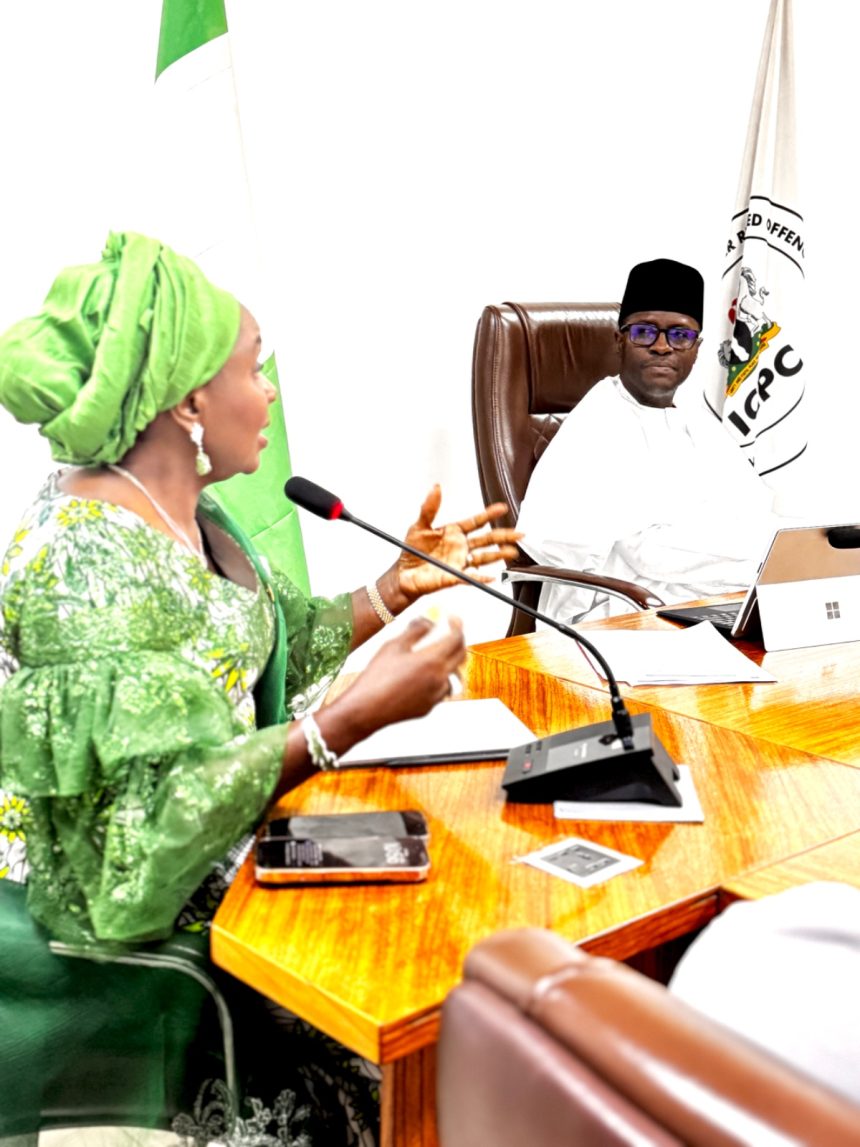
The commitment was made on Friday, September 11, 2026, when the NUPRC Chief Executive, Mrs. Oritsemeyiwa Eyesan, led members of her management team on a courtesy visit to the ICPC Headquarters in Abuja.
According to a press statement issued on Friday by Okor Odey, Head of Media and Public Communications, ICPC, and obtained by Oxford Reporters, ICPC Chairman, Dr. Musa Adamu Aliyu, SAN, said the Commission was prepared to support initiatives that would promote a more transparent and accountable regulatory framework within the petroleum sector.
Aliyu described NUPRC as a strategically important institution to Nigeria’s economy, stressing that weaknesses in the operations of the upstream regulator could have serious implications for the country’s economic fortunes.
He called for stronger institutional cooperation between both agencies, particularly in areas relating to integrity, information sharing, investigations, procurement and the prevention of financial leakages.
“Integrity in your sector is very important. We need investors, and if we are not transparent, it will be difficult for NUPRC to operate optimally,” the ICPC Chairman said.
He noted that corruption was more likely to flourish where institutional controls and safeguards were inadequate, making sustained collaboration between regulatory and anti-corruption agencies necessary.
The ICPC Chairman also praised NUPRC’s performance under the Commission’s Ethics and Integrity Compliance Scorecard (EICS), describing the achievement as evidence of the upstream regulator’s commitment to ethical conduct and institutional integrity.
Aliyu further stressed the importance of mutual trust and timely exchange of information, particularly because of the technical nature of investigations involving the petroleum industry.
He said the ICPC could benefit from NUPRC’s technical knowledge of the upstream sector, while both institutions could work more closely to strengthen procurement processes and prevent wastage and other forms of resource leakage.
Earlier, Eyesan said the upstream petroleum industry remained vital to Nigeria’s revenue generation, noting that the capital-intensive nature of the sector made effective regulation, sound governance and investor confidence essential.
She described the Petroleum Industry Act (PIA) as a major reform intended to reshape the regulatory landscape and create a more attractive environment for investment, especially following years of declining investment in the sector.
The NUPRC chief executive also disclosed that the Commission was intensifying efforts to develop Nigeria’s gas resources while improving governance and regulatory oversight across upstream operations.
According to her, the regulator was also reviewing the qualification requirements for its regular bidding rounds after encountering challenges involving some indigenous operators who secured assets but lacked the financial and technical capacity required for their development.
She added that disagreements surrounding some awarded assets had also contributed to delays in their development.
Eyesan disclosed that NUPRC planned to organise an onboarding programme for successful awardees in October, saying the regulator intended to invite the ICPC to participate in the programme.
She said the involvement of the anti-corruption agency would help sensitise successful operators on good governance, integrity and compliance with regulatory requirements.
Eyesan expressed appreciation to the ICPC for its support and assured the Commission that NUPRC would sustain the relationship by sharing relevant concerns and working jointly towards improving the effectiveness of its operations.