
BY EMMA PETER, ABUJA
The Federal Government has intensified efforts to strengthen state ownership and coordination of social protection programmes as part of measures to promote sustainable poverty reduction and improve support for vulnerable households across the country.
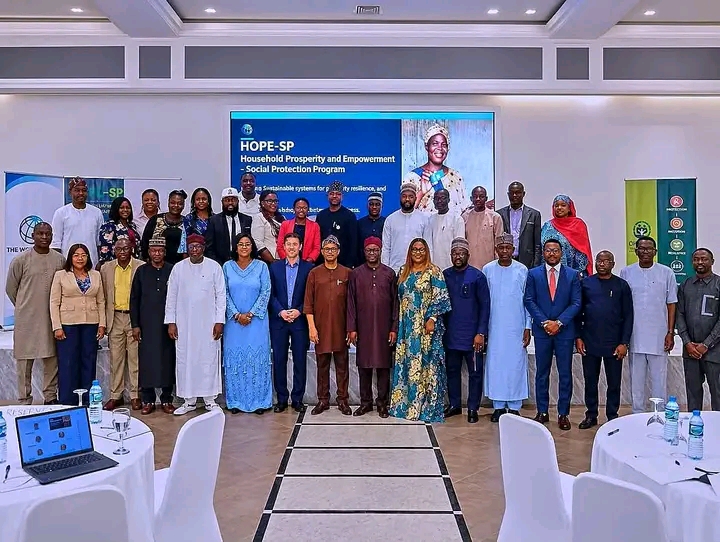
The initiative was highlighted at a two-day stakeholder consultation workshop on the Human Capital Opportunities for Prosperity and Equity–Social Protection (HOPE-SP) programme, organised by the Federal Ministry of Humanitarian Affairs and Poverty Reduction in collaboration with the World Bank in Abuja.
The consultation brought together State Commissioners of Finance, Budget and Economic Planning on Monday, October 26, 2026, while State Commissioners of Humanitarian Affairs and State Focal Persons participated in the second engagement on Wednesday, October 28, 2026.
Speaking at the engagement, the Minister of Humanitarian Affairs and Poverty Reduction, Dr. Bernard M. Doro, stressed the importance of state ownership, effective coordination and practical solutions that reflect the realities of communities across the country.
Doro noted that state and local governments are often the first responders during humanitarian crises, making their leadership critical to identifying vulnerable households, strengthening service delivery systems and ensuring that social protection interventions reach the people who need them most.
He called for a social protection framework that places households at the centre of interventions while empowering state and local governments to play leading roles in implementation.
The minister emphasised that effective collaboration among the three tiers of government would be essential to building a coordinated and sustainable system capable of addressing poverty and strengthening the resilience of vulnerable populations.
The stakeholder consultation focused on clarifying responsibilities at the state level, financing arrangements, long-term sustainability and implementation readiness. Discussions also examined ways to integrate social protection priorities into state and local government development plans and budgets.
The engagement underscored the need for governments at all levels to establish clear implementation structures, ensure adequate funding and develop practical strategies that would sustain social protection interventions beyond the initial stages of programme implementation.
Under the proposed framework, the Federal Government is expected to provide overall coordination, while state governments take the lead in implementing interventions within their respective communities, with local governments playing important roles in reaching vulnerable households.
The approach is designed to promote stronger government ownership, improve coordination and ensure that social protection programmes respond more effectively to the specific needs of communities.
Participants were urged to translate the discussions into concrete commitments, actionable plans and stronger delivery systems that would improve the effectiveness and sustainability of social protection initiatives.
The HOPE-SP programme forms part of broader efforts to strengthen Nigeria’s social protection architecture by connecting vulnerable households to opportunities that support livelihoods, improve resilience and promote economic inclusion.
The Federal Ministry of Humanitarian Affairs and Poverty Reduction reiterated the importance of moving beyond short-term relief measures towards sustainable interventions that empower individuals and families to overcome poverty and build more secure futures.
The central message of the consultation was the need to move from palliatives to sustainable pathways that provide vulnerable households with access to livelihoods, resilience and dignity through coordinated government action.