

BY EMMA PETER, ABUJA
The Director-General of the Industrial Training Fund (ITF) has disclosed that the Fund has trained more than 200,000 Nigerian artisans to upgrade their skills to international standards, improve their productivity and strengthen the country’s industrial workforce.
He said the initiative was part of the Federal Government’s efforts to address the shortage of skilled manpower, improve the quality of locally delivered technical services and reduce Nigeria’s dependence on foreign artisans for jobs that qualified Nigerians could perform.
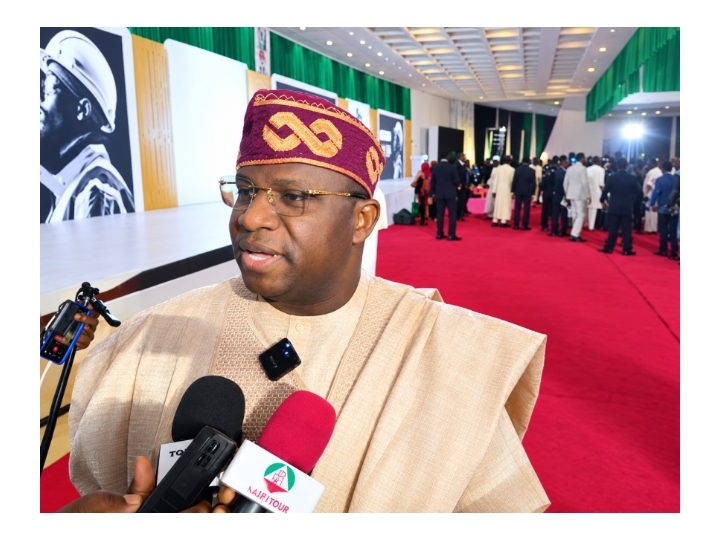
The ITF Director-General made this known while speaking with journalists at the State House, Abuja, on the sidelines of the 2026 National Industrial Manpower Summit (NIMS 2026).
He explained that the training programme was designed not only to improve artisans’ technical competencies but also to equip them with essential knowledge in entrepreneurship, project management, occupational safety, work ethics and customer relations.
According to him, these additional skills would enable artisans to manage their businesses more effectively, deliver quality services, attract customers and compete favourably in the international market.
He stressed that technical competence must be complemented by professionalism and effective business management, noting that some artisans possess practical skills but lack the entrepreneurial knowledge needed to turn those skills into sustainable businesses.
The Director-General said the ITF was also working towards standardised assessment and certification to ensure that qualified artisans could obtain recognised credentials demonstrating their professional competencies.
He added that the Fund was developing programmes to support outstanding trainees in establishing and expanding their businesses, thereby ensuring that skills acquisition translated into employment, enterprise development and improved livelihoods.
He commended President Bola Ahmed Tinubu for prioritising human capital development and acknowledged the efforts of the Senior Special Assistant to the President on Industrial Training and Development, Hon. Adamson Oluwatosin Ayinde, for his role in advancing the summit and promoting discussions on Nigeria’s industrial manpower needs.
The Director-General maintained that industrial development could not be achieved through machinery and technology alone without adequately trained personnel capable of operating, maintaining and improving them.
He said the ITF was therefore expanding its programmes to prepare young Nigerians for emerging opportunities in digital manufacturing, engineering, technical services and other critical areas of the economy.
Earlier in his keynote address, the ITF Director-General said the 2026 summit was building on the achievements of the inaugural edition held in 2025, which brought stakeholders together to deliberate on Nigeria’s skills development challenges and develop practical solutions for industrial transformation.
The summit, themed “Unlocking Nigeria’s Human Capital for Industrial Transformation: Building Skills, Driving Innovation and Creating Prosperity,” focused on strengthening the country’s skills base, promoting innovation and preparing Nigerian workers for the demands of a rapidly changing global economy.
He explained that recommendations from the previous summit had informed several initiatives being implemented by the ITF to improve vocational training, standardise skills development and strengthen the relationship between training institutions and industry.
According to him, the maiden summit was significant because it provided a platform for stakeholders to examine why Nigerian industries continued to rely on foreign artisans and technicians despite the country’s large population and considerable human resources.
He said the Federal Government was determined to address the situation by equipping Nigerian artisans with the skills and professional standards required to compete with their foreign counterparts.
The Director-General noted that Nigeria’s industrial manpower must evolve alongside global technological advancements, stressing that artificial intelligence and modern machinery could not replace the need for skilled human expertise.
“Without the manpower inside the industry, the machines cannot do the work. You can bring in artificial intelligence, but without expertise, it cannot function effectively,” he said.
He disclosed that the ITF was also working to clarify the responsibilities of institutions involved in technical and vocational education to eliminate duplication and ensure that training programmes met the actual needs of the economy.
He attributed progress in this area to the coordination provided through the National Council on Skills, chaired by Vice-President Kashim Shettima, which has helped strengthen policy direction and institutional collaboration in skills development.
The Director-General further highlighted the importance of Sector Skills Councils, describing them as industry-led bodies that bridge the gap between the skills required by employers and those produced by educational and training institutions.
He explained that the councils would help ensure that artisans and technicians received structured training and adequate preparation before entering the workforce, rather than relying solely on informal apprenticeship arrangements that might not meet established professional standards.
He said the ITF was also developing a new generation of technically skilled Nigerians through digital training and modern vocational education.
As part of the initiative, he disclosed that the Fund had established a model training academy in Jos, Plateau State, where secondary school students could combine conventional education with practical technical training.
Under the arrangement, students attend their regular schools while spending additional hours each week acquiring practical skills at the academy.
He said the initiative was designed to demonstrate how dual education could be implemented in Nigeria, allowing young people to develop technical competencies alongside their academic studies.
The Director-General added that students under the programme were being prepared for international skills competitions, including WorldSkills, which provides a platform for showcasing technical and vocational excellence.
He expressed hope that the model could be replicated across senatorial districts nationwide with the support of state governments, lawmakers and other stakeholders.
He also announced that the ITF was establishing digital fabrication centres to enable young engineers and other skilled personnel to transform computer-generated designs into finished products using modern manufacturing equipment.
According to him, the centres would cover specialised areas, including metal fabrication, leather processing, ceramics, woodwork and furniture production, as well as other industrial applications.
He cited the metal digital fabrication facility in Lagos as an example of the Fund’s efforts to promote innovation, local manufacturing and the practical application of engineering skills.
The centres, he explained, would provide opportunities for technically trained graduates to design products, operate advanced equipment, develop prototypes and contribute to the growth of domestic industries.
He said the initiative would complement the ITF’s existing artisan training programmes by preparing younger Nigerians for the demands of digital manufacturing and advanced industrial production.
The Director-General reiterated the Fund’s commitment to strengthening vocational education, improving professional certification, promoting entrepreneurship and building a skilled workforce capable of supporting Nigeria’s industrial transformation.
He said the Federal Government’s investment in human capital development would help create jobs, improve productivity, strengthen local manufacturing and position Nigerian artisans and technicians to compete effectively in the global economy.