

By Emma Peter, Abuja
As Hon. Danjuma Samuel Shekwolo approaches his first 100 days in office as Executive Chairman of Kuje Area Council, his administration is beginning to offer a picture of a grassroots leader seeking to connect governance with the everyday needs of the people. From agriculture and education to sanitation, infrastructure, youth empowerment and workers’ welfare, the emerging direction of his administration points to an emphasis on practical interventions and community engagement.
For Shekwolo, the 100-day mark is more than a ceremonial milestone. It provides an opportunity to reflect on the responsibilities that came with the mandate entrusted to him by the people and to reaffirm his commitment to building a peaceful, progressive and economically vibrant Kuje. His approach so far has increasingly presented him as a chairman who wants government to be felt beyond the council secretariat and closer to the communities.
One of the clearest indications of this philosophy is his administration’s attention to agriculture. Kuje has a strong agricultural identity, and Shekwolo has identified farming as one of the important pillars upon which the local economy can be strengthened. Recently, his administration flagged off the distribution of 10,000 bags of fertiliser to farmers across the council’s 10 political wards.
The agricultural intervention is significant because it targets one of the sectors that directly affects household livelihoods and food security. Shekwolo has described agriculture as key to the economy and called on residents to return to farming, while stressing the need to reorganise and encourage farmers. The initiative therefore goes beyond political messaging; it speaks to the economic realities of a community where agriculture remains an important source of livelihood.
His administration has also linked the agricultural programme with wider efforts in education and environmental sanitation. Alongside the fertiliser distribution, the council provided instructional materials, including 20,000 exercise books, for public primary schools and introduced waste bins at strategic locations. The initiatives reflect an attempt to address different aspects of community life simultaneously — supporting farmers, helping schools and encouraging a cleaner environment.
That broad approach has also been reflected in other programmes attributed to the administration. Reports on the council’s activities have highlighted youth skills acquisition, road construction and grading, water-system revival, healthcare outreach, environmental sanitation, workers’ welfare and other interventions. More than 100 youths have reportedly benefited from skills-acquisition programmes covering areas including tailoring, catering, computer training, barbing, make-up, bag making and videography.
For a chairman operating at the grassroots, such interventions can become an important measure of leadership because they deal with issues residents encounter in their daily lives. Shekwolo has also emphasised accountability, transparency and prudent management of public resources, urging councillors and appointees to focus on delivering on their responsibilities. At his administration’s early stage, that emphasis establishes a governance philosophy centred on responsibility and results.
Beyond projects and programmes, however, the more enduring test of Shekwolo’s leadership will be his ability to preserve peace and harmony among the diverse communities that make up Kuje. Political differences are inevitable in any democratic society, but local government is ultimately about serving people who may belong to different political parties, ethnic groups, religions and social backgrounds.
Against this background, the recent comment attributed to Shekwolo generated some public discussion and briefly shifted attention away from the development initiatives of his administration. However, the Chairman has since explained that he was quoted out of context, providing clarification on the circumstances surrounding the remarks. The matter has consequently been addressed, and there is an opportunity for attention to return to the broader responsibilities and programmes of the administration.
More importantly, Shekwolo has reiterated his commitment to the welfare and wellbeing of every resident of Kuje, regardless of political affiliation or background. This reaffirmation is particularly important as he approaches his 100-day milestone, as it underscores the responsibility of his office to serve the entire council and maintain an atmosphere where residents can work together for the development of their communities.

Rather than allowing a comment that has already been clarified to define his administration, the focus can now return to the issues that directly affect the people — agricultural empowerment, youth development, education, infrastructure, healthcare, sanitation and the preservation of peace. These are the areas through which a grassroots administration ultimately establishes its connection with the people.
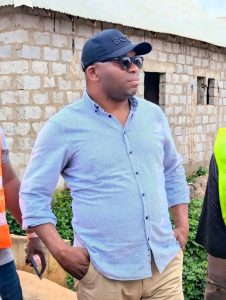
There is also a personal dimension to Shekwolo’s political identity. His public engagements have increasingly portrayed him as a grassroots politician who is comfortable interacting with ordinary residents and community stakeholders. His focus on farmers, youths, schools, sanitation and local infrastructure reinforces the image of a leader seeking to remain connected to the practical concerns of the people rather than being removed from them.
His reported engagement with public-health initiatives further adds to this picture. During discussions around malaria prevention and the distribution of insecticide-treated nets, Shekwolo pledged to support community mobilisation and ensure that hard-to-reach communities were not left behind. Such engagements point to a willingness to work with technical teams and community actors in pursuing public-interest programmes.
As he approaches 100 days, therefore, Shekwolo’s story is best understood as one of an administration still establishing its identity. The early focus on agriculture, education, sanitation, youth development, infrastructure and welfare provides a foundation upon which a longer-term legacy can be built. The chairman’s pedigree as a grassroots political figure will ultimately be strengthened when these interventions translate into sustained improvements that residents can see and feel.
Kuje is a community with enormous potential, but unlocking that potential requires more than political mobilisation. It requires peace, cooperation, investment, productive agriculture, functional infrastructure, opportunities for young people and a government that can engage people across political divides. Shekwolo’s challenge — and opportunity — is to make these principles the enduring signature of his tenure.
As the first 100 days approach, the message from the administration should therefore be one of continuity, inclusion and service. The controversies of politics will come and go, but the needs of the people remain. Roads must be improved, farmers supported, schools strengthened, communities kept clean, youths empowered and peace protected.
For Shekwolo, the coming months offer an opportunity to deepen the positive work already underway and to demonstrate that being a “man of the people” means serving the entire people. If the energy behind the early interventions is sustained, and if his commitment to peace, fairness and inclusive governance remains central to his administration, the 100-day milestone can become not merely a celebration of time in office, but the beginning of a more enduring story of grassroots development in Kuje.
Oxford Reporters Editor’s Desk
oxfordreporters52@gmail.com