
By Emma Peter, Lafia
Nasarawa State has taken a major step towards strengthening environmental protection, watershed management and climate resilience with the commissioning of heavy-duty equipment procured through the Agro-Climatic Resilience in Semi-Arid Landscapes (ACReSAL) Project with support from the World Bank.
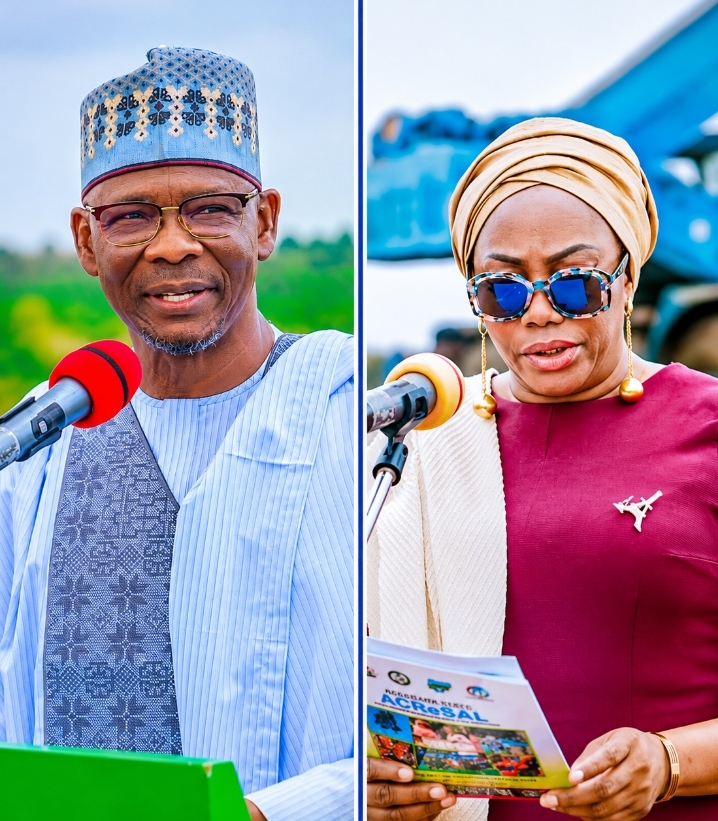
The equipment, commissioned by the Nasarawa State Governor, Engr. Abdullahi A. Sule, and subsequently handed over to the Nasarawa State ACReSAL office, is expected to significantly improve the state’s capacity to respond to environmental challenges across communities and vulnerable landscapes.
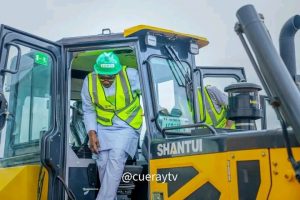
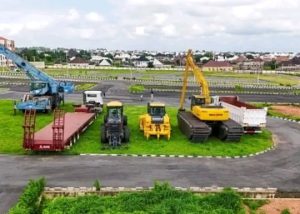
The fleet comprises a swamp buggy, bulldozer, grader, low-bed truck and dump trucks, providing the state with practical machinery required for large-scale environmental and watershed management interventions.
For the Chairperson of the Nasarawa State Steering Committee on ACReSAL and Commissioner for Environment, Solid Minerals and Mining, Dr. Princess Margaret Itake Elayo, the commissioning represents more than the acquisition of machinery; it is an important investment in the state’s ability to translate environmental policies and plans into practical action.
Dr. Elayo said the equipment would enhance the capacity of government and its partners to tackle environmental challenges requiring heavy-duty intervention, particularly in areas affected by flooding, erosion, wetland degradation, blocked waterways and poor storm-water management.
She noted that these challenges are interconnected and therefore cannot be effectively addressed through isolated interventions.
According to her, the state’s environmental response must be coordinated and integrated, bringing together government ministries, agencies, local government councils and development partners to ensure that interventions are properly planned and executed.
Under her leadership, the Ministry of Environment, Solid Minerals and Mining will work closely with ACReSAL, the Nasarawa State Environmental Protection and Waste Management Agency (NASEWMA), Nasarawa State Water Management Agency (NASWAMSA), National Emergency Management Agency (NEMA), Nasarawa State Geographic Information Service (NAGIS), the Ministry of Works, Housing and Transport, the Ministry of Lands and Urban Development, Local Government Councils and other relevant agencies.
The collaboration is expected to promote better planning, effective deployment of resources and sustainable implementation of environmental interventions across the state.
The importance of the equipment is underscored by the growing environmental pressures confronting communities across Nasarawa. Flooding and erosion continue to threaten roads, farmlands, homes and other infrastructure, while poor drainage and blocked waterways can intensify the impact of heavy rainfall.
The swamp buggy, bulldozer and grader are therefore expected to provide valuable support for interventions in difficult terrains, while the low-bed and dump trucks will facilitate the movement of heavy machinery and materials to project locations.
 j
The deployment of the equipment also strengthens the operational dimension of ACReSAL’s intervention in Nasarawa, complementing its broader focus on sustainable land management, watershed restoration, climate-smart agriculture and community resilience.
The World Bank-backed ACReSAL programme is designed to address land degradation and climate vulnerability through an integrated landscape-management approach, recognising that environmental, agricultural and water challenges are closely connected.
For Nasarawa, the latest development builds on the state’s ongoing collaboration with ACReSAL and the World Bank in implementing environmental and climate-resilience interventions.
The state has in recent years witnessed various ACReSAL-supported interventions aimed at restoring degraded landscapes, improving agricultural livelihoods and strengthening communities’ capacity to adapt to climate-related challenges.
The commissioning of the heavy-duty equipment now provides an additional operational advantage, giving relevant institutions greater capacity to undertake physical interventions where necessary.
However, the success of the investment will ultimately depend on proper coordination, responsible deployment, regular maintenance and accountability in the use of the equipment.
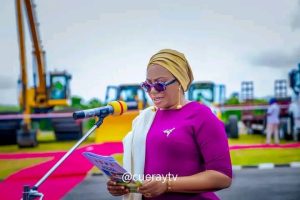
Dr. Elayo therefore expressed appreciation to the ACReSAL programme and the World Bank for the intervention, describing the equipment as a valuable addition to the state’s environmental management capacity.
She reaffirmed the ministry’s commitment to working with ACReSAL and other relevant institutions to ensure that the equipment is deployed effectively for the benefit of communities and the environment.
The development also reinforces the Nasarawa State Government’s broader commitment to building a more resilient state where environmental protection is integrated into development planning.
As urban centres expand and climate-related pressures become more pronounced, the need for coordinated environmental management is becoming increasingly important.
The commissioning therefore marks a significant transition from planning to practical capacity — providing Nasarawa with the tools required to move more decisively against environmental degradation, flooding, erosion and watershed challenges.
For the Ministry of Environment, Solid Minerals and Mining, the objective is clear: to ensure that the machinery becomes a catalyst for sustained environmental action and not merely an addition to government assets.
With the combined efforts of ACReSAL, the World Bank, state ministries and agencies, local governments and communities, the equipment has the potential to strengthen Nasarawa’s environmental response and contribute meaningfully to the state’s long-term climate resilience.
The commissioning is, ultimately, an investment not only in machinery, but in the protection of Nasarawa’s land, water resources, communities and future generations.