

BY EMMA PETER, ABUJA
As Kwali Area Council marks 30 years of its creation, the first 100 days of the administration of Executive Chairman, Hon. Nuhu Daniel Kwali, have been marked by a wide range of infrastructure, healthcare, education, agricultural and empowerment interventions across communities in the council.
The anniversary, which coincides with the chairman’s first 100 days in office, provides a dual occasion for Kwali to reflect on three decades of grassroots administration while taking stock of the early activities of the present administration.
Created on October 1, 1996, with its headquarters in Kwali Town, the Area Council has, over the past three decades, developed through successive administrations and served communities spread across its ten wards.
The 30th anniversary is therefore not only a celebration of the institution but also an opportunity to recognise the contributions of successive leaders, traditional institutions, civil servants, community leaders, development partners and residents to the growth of Kwali.
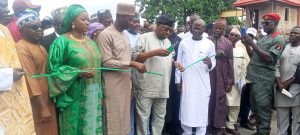
At the centre of the 2026 celebration is the administration of Hon. Nuhu Daniel Kwali, which has used its first 100 days to commence and complete projects touching roads, healthcare, water supply, electricity, education, agriculture, security and community development.
Among the major infrastructure interventions are the construction of Angwan Dnapabui Road linking the community to the Federal Highway, with solar street lighting, the construction of Bonugo Bypass Road to the Federal Highway, Tukurua Bridge, Bako Road and the 1.6-kilometre Piri-Gumbo Road, also with solar street lighting.
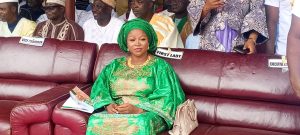
The administration has also undertaken drainage rehabilitation opposite Yala Market in Kwali Central and rehabilitation of the Dabi-Bako road, while work has continued on other rural access routes. These interventions are aimed at improving connectivity between communities, markets, schools, healthcare facilities and other essential services, particularly for farmers, traders and residents in rural areas.
The administration has also expanded interventions in water supply through motorised solar-powered boreholes in communities including Angwan Sarki, Nyitse, Bwolo, Pai, Dapa and Kuka, as part of efforts to improve access to safe and reliable water.
In the power sector, the council has provided and installed new 33KVA transformers in Satellite Quarters, Koroko, Pai and Bako communities, while solar street lights have been installed in several communities, including Bonugo, Ijah-Dabuta, Leleyi-Gbari, Damakusa, Tungan Sarki, Kamadi, Big Sheda, Yewuti, Pukafa, Leda and other locations.
Healthcare has also featured prominently in the administration’s first 100 days. The Lambata Clinic has been rehabilitated and upgraded into a modern health facility with a solar power system, while the Kilankwa II Health Centre has undergone rehabilitation and expansion, including the provision of a perimeter fence and motorised solar-powered borehole.
A new health centre is also being constructed in Pache Community with a solar power system, adding to efforts to strengthen primary healthcare delivery and bring basic medical services closer to residents.
Education has equally received attention, with the renovation of Wako Central Primary School and the provision of 40,000 exercise books to schools across the Area Council to support pupils and improve access to basic learning materials.
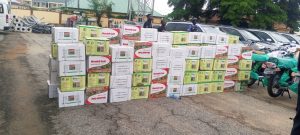
Agriculture, which remains an important component of the local economy, has also been placed among the administration’s priorities. As part of activities marking the 100 days in office, the council distributed 130 agricultural herbicides to local farmers to support agricultural production and productivity.
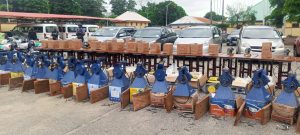
Beyond physical infrastructure, the 100-day programme has included direct empowerment initiatives. A total of 60 sewing machines were distributed to beneficiaries, comprising 20 industrial sewing machines and 40 regular butterfly sewing machines, to support skills acquisition, small businesses and entrepreneurship.
The administration also distributed grinding machines to selected beneficiaries as part of efforts to support household businesses and income-generating activities, while 30 Bajaj motorcycles were provided to support local security operations and improve mobility at the community level.
The administration further provided four Siena buses and a car in support of traditional institutions. Four of the vehicles were allocated to traditional rulers, while another vehicle was provided to the APC Area Council Chairman, bringing the total number of vehicles provided under the arrangement to five.

The projects and interventions have also been accompanied by efforts to improve the council’s institutional environment, including the renovation of the Chairman’s Office and conference hall, Vice Chairman’s Office and Logistics Office, as well as renovation of the Area Council fence and reconstruction of the Area Council Secretariat security post.
Speaking at the 100-day celebration, Senator Philip Aduda, who represented the FCT Minister, Barrister Nyesom Wike, commended the projects undertaken by the Nuhu Daniel Kwali administration within its first 100 days.
Aduda urged the chairman to sustain the pace of development and do more for the people of Kwali. He also spoke positively about the Tinubu administration’s interventions in the Federal Capital Territory and said, in his assessment, that the FCT had witnessed significant transformation.
Aduda further appealed to residents of Kwali to support President Bola Ahmed Tinubu in the 2027 presidential election.
The chairman, in his goodwill message marking the 100 days, said the first three months of his administration had been a period of responsibility, engagement and action.
According to him, leadership at the grassroots should not be measured merely by the number of projects announced, but by how effectively government responds to the everyday realities of residents.

He said the administration’s interventions in education, healthcare, roads, water supply and agriculture were designed around the needs of the people.
“For me, these interventions are not simply projects to be counted,” the chairman said, explaining that behind every road was a farmer or trader trying to move goods, behind every health facility was a family seeking care, behind every classroom was a child whose future deserved investment, and behind every borehole was a community entitled to safe and reliable water.
Nuhu Daniel acknowledged that 100 days was only the beginning, saying more remained to be done and promising that his administration would continue to listen to communities, prioritise responsibly and deploy resources for the collective good of residents.
He thanked his deputy, councillors, management and staff of the Area Council, traditional rulers, religious and community leaders, youth and women groups, development partners, political stakeholders and other residents for their contributions.
The chairman also stressed the importance of citizen participation in governance, saying government should not happen above the people but “with the people and for the people.”
The traditional institution has similarly welcomed the administration’s early activities. In a goodwill message marking the 100 days and the 30th anniversary of Kwali Area Council, the Etsu Kwali and Chairman of the Council of Chiefs, HRH Luka Ayedoo Nizassan III, congratulated Nuhu Daniel Kwali and the people of Kwali.
The monarch described the 30-year journey of the Area Council as one characterised by resilience, unity, cultural pride and gradual development. He commended the chairman’s early engagement with traditional institutions and his focus on the welfare of the people, assuring the administration of the support and prayers of the traditional institution.
The monarch also called on residents of Kwali from different backgrounds to continue to live in peace, support government and remain good ambassadors of the Area Council.
The 30th anniversary celebration also provides an opportunity to look back at the institutional history of Kwali Area Council.
Since its creation in 1996, the council has passed through different phases of administration, with leadership provided at various times by Sole Administrators, Acting Chairmen and elected Executive Chairmen.
The first administration was led by Hon. Samuel Tising as Sole Administrator from 1996 to 1997, followed by Hon. Iya Nizazo Baza as Executive Chairman from 1997 to 1998.
Hon. John O. Okumudio served as Sole Administrator from 1998 to 1999 before Hon. Samuel M. Gwamna became Executive Chairman from 1999 to 2004.
He was followed by Hon. Mohammed Zubairu Gimba from 2004 to 2006 and Hon. Jibrin Zubairu Yawari from 2006 to 2007.
Barrister Yunus Waziri Wodi served as Sole Administrator in 2007, before Hon. Samuel M. Gwamna returned as Executive Chairman later that year and served until 2008.
Hon. Danlami Saleh Yebu subsequently served as Acting Chairman from 2008 until May 2010, followed by Hon. Joseph K. Shazin, who served as Executive Chairman from 2010 to 2013.
Hon. Ibrahim Daniel served as Executive Chairman from 2013 to 2016, after which Hon. Joseph K. Shazin returned for another term from 2016 to 2019.
From 2019 to 2026, the council was led by Hon. Danladi Chiya.
The emergence of Nuhu Daniel Kwali in 2026 therefore represents another chapter in the institutional history of the Area Council.
Over the years, development in Kwali has extended beyond political leadership to encompass the contributions of traditional rulers, community leaders, public servants, professionals, farmers, traders, artisans, teachers, health workers and young people.
Healthcare development has included the establishment of Kwali General Hospital, which commenced operations in 2003 and became a full-fledged secondary healthcare facility in 2005, alongside primary healthcare facilities serving communities across the Area Council.
Road projects implemented at different periods have also helped connect communities with markets, schools, healthcare facilities and other essential services, while educational interventions have included construction, rehabilitation and maintenance of schools.
Kwali is also home to a number of educational, scientific and research institutions, including the Government Science and Technical College, Vocational Enterprise Institute, Nigerian Institute of Hospitality and Tourism, Mathematical Centre and the Nigerian Educational Research and Development Council.
The Area Council’s cultural identity is closely associated with the legacy of the internationally recognised potter, Dr. Ladi Kwali, whose name has become synonymous with Nigerian pottery and traditional craftsmanship.
Its cultural and tourism assets also include the Dr. Ladi Kwali Pottery Centre, Kwali Pottery Centre, Kwali Dam, Ashara Falls, Dafa Spring, Lake Kawu, Kuje Cave and the Gurara River.
With agriculture, commerce, pottery and small-scale enterprise forming important components of local economic life, the council’s development story has continued to evolve around the need to create opportunities while improving basic infrastructure.
The first 100 days of the Nuhu Daniel administration consequently come against the backdrop of this 30-year institutional journey. Rather than presenting the period as the complete story of Kwali, the administration’s projects form another chapter in a longer history that began with the creation of the Area Council in 1996.
For the people of Kwali, the anniversary therefore combines memory and expectation — recognition of what has been achieved over three decades and attention to what remains to be done.
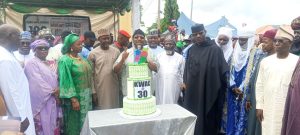
The celebration also featured the cutting of a ceremonial cake to mark both the 30th anniversary of Kwali Area Council and the first 100 days of the Nuhu Daniel administration, bringing the two milestones together in a symbolic moment.
As Kwali enters its fourth decade, the projects and programmes of the present administration now form another chapter in the council’s continuing development story.
Thirty years after its creation, Kwali Area Council continues to write its history — with successive administrations, traditional institutions and, above all, its people contributing to the story.
And in 2026, that story has entered another chapter: 30 years of Kwali Area Council and 100 days of Nuhu Daniel Kwali’s administration.