
By Jane Rogers, Lagos
The Independent National Electoral Commission (INEC) has reaffirmed its commitment to conducting credible, transparent and trustworthy elections in 2027, announcing plans to strengthen electoral technology, protect election results and tackle misinformation ahead of the polls.
The Commission also called on online publishers and other media organisations to promote responsible journalism, accurate reporting and voter education to safeguard public confidence in Nigeria’s electoral process.
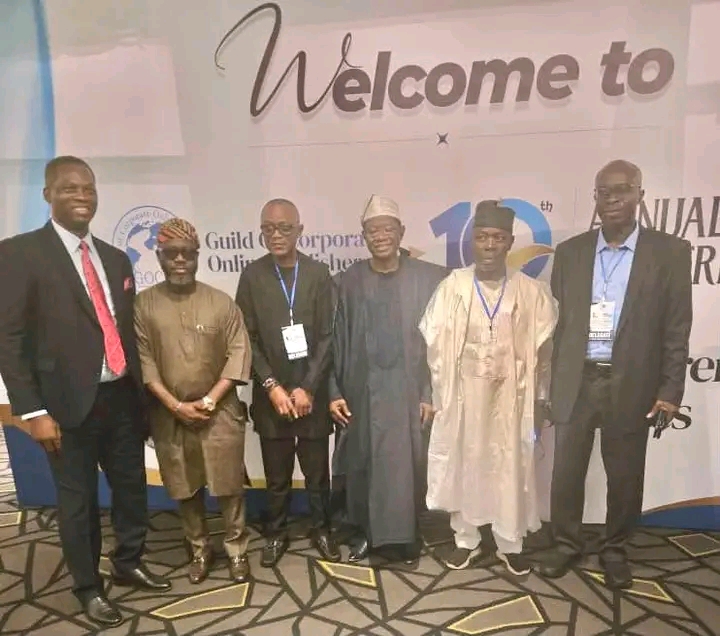
INEC Chairman, Prof. Joash Amupitan, SAN, made the call in a keynote address delivered by the Resident Electoral Commissioner (REC) for Lagos State, Prof. Ayobami Salami, at the 10th Annual Conference of the Guild of Corporate Online Publishers (GOCOP), held in Lagos on Thursday, October 8, 2026.
The conference, themed “2027 Elections – Trust, Transparency and Shared Responsibilities,” brought together media professionals, electoral stakeholders, academics and civil society organisations to discuss ways of strengthening democratic governance through public trust and collective responsibility.
Amupitan, who noted that the 2027 General Elections were approaching, said INEC had made significant progress in implementing its electoral timetable while improving its operational, technological and logistical capacity.
He explained that the Commission was undertaking a comprehensive overhaul of its election administration processes, technology, logistics, staff capacity and field operations to enhance preparedness for the forthcoming elections.
According to him, INEC operates through 23 departments and directorates at its headquarters, 36 state offices, including the Federal Capital Territory, and 774 local government area offices nationwide.
On voter registration, the INEC chairman disclosed that the three phases of the Continuous Voter Registration (CVR) exercise conducted between August 2025 and July 2026 recorded more than 10.6 million new voters.
He said the development had increased the National Register of Voters to a historic 103 million registered citizens following the completion of data processing and synchronisation.
Amupitan also announced that nationwide collection of Permanent Voters’ Cards (PVCs) would commence on Friday, October 9, 2026, urging online publishers to assist the Commission in mobilising registered voters and disseminating accurate information about designated collection centres.
He emphasised that the media had a crucial role to play in ensuring that eligible voters were adequately informed about PVC collection and other activities outlined in the electoral timetable.
On electoral technology, the INEC chairman highlighted upgrades to the Bimodal Voter Accreditation System (BVAS) and the enhanced electronic EC8A system, which are designed to improve the electronic visibility of polling unit results.
He further disclosed that the Commission was deploying artificial intelligence-supported auditing mechanisms and strengthening its cybersecurity systems to protect electoral databases and critical infrastructure against potential threats.
However, Amupitan cautioned that technology alone could not guarantee credible elections, stressing that public trust must be earned through transparency, consistent implementation of electoral laws and verifiable election procedures.
He noted that effective logistics, institutional discipline and transparent communication with citizens were equally essential to ensuring confidence in the electoral process.
Addressing the growing influence of digital media on elections, the INEC chairman warned that fake news, unverified leaks, sensational reporting, politically charged narratives about violence and artificial intelligence-generated deepfakes could undermine public confidence, intensify political tensions and discourage voter participation.
He urged online publishers to avoid clickbait journalism and ensure that the pressure to publish breaking news did not compromise accuracy and professional standards, particularly during the election period.
To strengthen collaboration between INEC and GOCOP ahead of the 2027 elections, Amupitan proposed a three-point strategic partnership covering digital fact-verification, rigorous editorial self-regulation and a national voter education initiative.
The proposed partnership is expected to improve the accuracy of electoral reporting and expand public awareness of PVC collection and other important electoral activities.
In his opening remarks, the Conference Chairman, Dr. Olisa Agbakoba, SAN, stressed the constitutional right of Nigerians to vote and challenged INEC to ensure free, fair and credible elections in 2027.
Agbakoba also raised concerns about issues expected to dominate political discussions ahead of the elections, particularly fuel subsidy policy and the constitutional authority to declare election results.
He challenged presidential candidates to explain their positions on fuel subsidy and outline the alternative policies they would introduce if elected.
The senior lawyer also questioned the growing circulation of election projections, opinion polls and unofficial results across traditional and digital media platforms, asking whether opinion polls could be subjected to proper verification and fact-checking.
Responding to questions about the authority to declare election results, Salami explained that the Constitution empowers designated Returning Officers to return election results in accordance with their assigned responsibilities.
He clarified that holding an administrative or supervisory position within INEC did not automatically confer the constitutional authority to return election results.
According to Salami, even as a Resident Electoral Commissioner, he did not possess the constitutional power to announce or return election results in that capacity.
He explained that Returning Officers are appointed by the Commission and are constitutionally empowered to return results for the elections assigned to them.
The clarification highlighted the distinction between INEC officials’ administrative and supervisory duties and the specific constitutional responsibilities of Returning Officers in the electoral process.
In his welcome address, GOCOP President, Danlami Nmodu, MNI, underscored the importance of the conference, particularly with the 2027 General Elections approaching.
He called for free, fair and credible elections and urged political leaders to place the interests of Nigerians above personal and partisan considerations.
Nmodu also called for stronger government intervention to address insecurity across the country and appealed for greater support for the Guild and its activities.
The Imo State Commissioner for Information, Mr. Declan Emelumba, who represented Governor Hope Uzodimma, congratulated GOCOP on its 10th annual conference and highlighted achievements recorded by the state government.
He also urged stakeholders to support efforts towards ensuring peaceful, free, fair and credible elections in 2027.
The conference equally paid tribute to the late Dotun Oladipo, former GOCOP president and publisher of The Eagle Online.
In his keynote address, Amupitan expressed condolences to the Guild, Oladipo’s family and the wider media community, describing the late publisher as a pioneer of Nigerian digital journalism and a committed advocate of ethical online publishing.
The conference provided a platform for publishers, editors, academics, civil society organisations and electoral stakeholders to examine practical measures for strengthening trust, transparency and accountability in Nigeria’s democratic process.