
BY EMMA PETER, ABUJA
The Independent National Electoral Commission (INEC) has assured Nigerians and the international community that it will remain neutral and focused on delivering a transparent, credible and peaceful 2027 General Election.
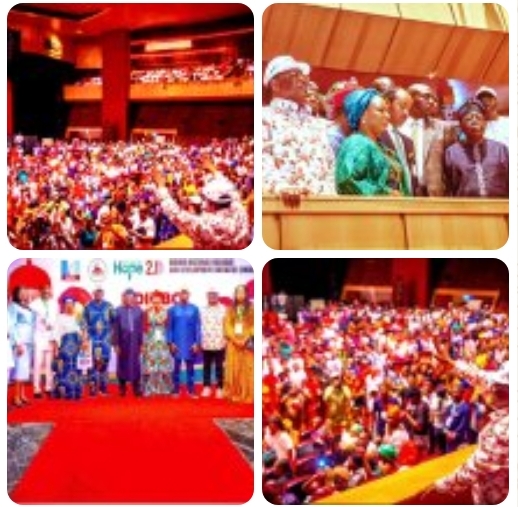
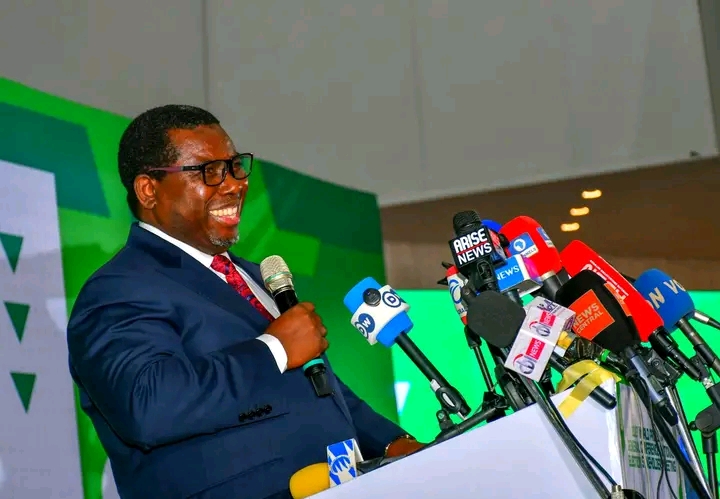
The INEC Chairman, Prof. Joash Amupitan, SAN, gave the assurance on Tuesday, October 6, 2026, during a World Press Conference and National Stakeholders’ Meeting organised to mark 100 days to the first ballot of the 2027 elections at the Bola Ahmed Tinubu International Conference Centre, Abuja.
Amupitan said the Commission had entered the final stage of preparations, with the production of election materials underway, technology undergoing quality checks, the voters’ register ready for public scrutiny and personnel being trained for the exercise.
“As we begin this 100-day sprint to the 2027 General Election, we reassure the nation and the international community of our total commitment to neutrality, operational excellence, and the sacred integrity of the ballot box,” he said.
He described the milestone as more than a countdown, saying it represented a call for all stakeholders to intensify their efforts towards delivering an election that would meet global standards of transparency, integrity and peaceful participation.
The INEC chairman noted that since taking over leadership of the Commission on October 23, 2025, the electoral body had conducted the Anambra, Ekiti and Osun governorship elections, FCT Area Council elections and several federal and state bye-elections.
According to him, reports from local and international observers indicated that the elections met established standards of electoral integrity, while the exercises provided opportunities to test improvements in logistics, deployment of personnel and sensitive materials, as well as intelligence-led security arrangements.
Amupitan said INEC released its Revised Timetable and Schedule of Activities for the 2027 elections on February 26, 2026, containing 14 statutory milestones, nine of which had already been completed.
He said the timetable had subsequently been converted into an operational plan covering the Commission’s 23 headquarters departments and directorates, 36 state offices, the Federal Capital Territory and its 774 Local Government Area offices.
On funding, the chairman commended the Federal Government for the timely release of statutory allocations, saying the funds had enabled the Commission to meet international vendor commitments, procure election technology and improve its infrastructure.
He, however, appealed for the release of outstanding funds to enable the Commission to complete the remaining preparations without disruption.
Giving an update on voter registration, Amupitan disclosed that 10,772,421 new voters were registered during the three phases of the Continuous Voter Registration exercise, taking the National Register of Voters to about 103 million.
He said the register would be displayed nationwide from October 9 to 15, 2026, to enable citizens scrutinise the details, while distribution of Phase One Permanent Voter Cards to Local Government centres would commence on October 9.
The chairman further disclosed that 18 of the 22 registered political parties submitted 36 presidential and vice-presidential candidates, while the final list of National Assembly candidates was published on September 12.
He said the final list of candidates for governorship and State Houses of Assembly elections would be published on October 10.
On election technology, Amupitan said INEC was advancing the production of 57,000 new Bimodal Voter Accreditation System devices, with some already delivered.
He added that arrangements for printing ballot papers and result sheets were also nearing completion.
To strengthen logistics, he said INEC had renewed its agreements with the National Union of Road Transport Workers, Road Transport Employers Association of Nigeria and Maritime Workers Union of Nigeria for the mobilisation of more than 100,000 vehicles and 4,000 boats.
According to him, sensitive election materials would be moved from the Central Bank of Nigeria vaults to the Local Government Areas 72 hours before the polls and subsequently distributed to all 8,838 Registration Area Centres by 4:00pm on the eve of election day.
The arrangement, he explained, was designed to ensure that polling units opened nationwide by 7:30am.
Amupitan also announced that INEC would conduct a six-day stress test of configured BVAS devices from October 23 to 28, 2026, followed by a nationwide mock accreditation exercise in November.
He disclosed that the Commission had established an Artificial Intelligence Division under its ICT Department, stressing that the technology would operate with mandatory human oversight.
On election security, the INEC chairman said the Commission, through the Inter-Agency Consultative Committee on Election Security, would commence joint training for electoral security personnel.
He said joint monitoring and undercover surveillance teams would also work with the EFCC, ICPC and NFIU to combat vote-buying, warning that offenders would be arrested and prosecuted in line with the Electoral Act 2026.
The Commission, he said, would require 707,384 ad hoc personnel for each of the two election days scheduled for January 16 and February 6, 2027, amounting to 1,414,768 engagements across 176,846 polling units.
He said recruitment through the INEC Portal for Recruitment of Election Staff opened on September 18 and would close at midnight on November 18, 2026.
Amupitan also raised concerns over the growing threat posed by disinformation, deepfakes, voice cloning and other forms of artificial intelligence-generated content during elections.
He urged media organisations to establish fact-checking mechanisms, verify information with INEC before publication and avoid announcing unofficial results.
“In national elections, it is far more important to be right than to be first,” he said.
He further disclosed that the INEC Media Accreditation Portal would become operational before the end of October and advised media organisations intending to cover the elections to apply early.
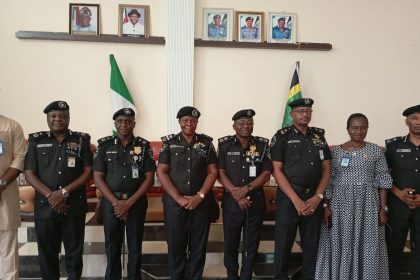
Speaking on behalf of the Inspector-General of Police, AIG Alyonu Francis Idu said the Nigeria Police Force was conducting clearance operations in Kogi, Niger, Benue and Taraba States to address security challenges ahead of the elections.
He said the security situation had created “pockets of fear here and there,” assuring that the police were working to stabilise the affected areas and restore social harmony before the polls.
Idu said the police would review their pre-election operations in November and provide an update to Nigerians by the end of December.
“We must use legitimate authority, not power, to regulate the conduct of the election,” he said.
The Chairman of the Inter-Party Advisory Council, Dr. Yusuf Dantalle, commended INEC over the recent Osun governorship election, describing the exercise as well received and reflective of what Nigerians expect from future elections.
Dantalle cautioned electoral officials against partisan conduct and urged security agencies to remember their constitutional responsibilities.
He also called on political parties to support INEC, while urging the media to verify information before publication.
“This election will come and go, but Nigeria will remain,” he said, urging INEC to engage political parties more extensively before the election.
The Chairman of the Senate Committee on Electoral Matters, Senator Simon Lalong, reaffirmed the National Assembly’s commitment to strengthening Nigeria’s electoral framework.
Lalong said credible elections remained a collective responsibility involving political parties, security agencies, the media, civil society organisations and voters.
Similarly, the Chairman of the House Committee on Electoral Matters, Hon. Adebayo Balogun, urged INEC to ensure timely enforcement of constitutional and electoral provisions to minimise avoidable litigation.
The European Union Ambassador to Nigeria and ECOWAS, Amb. Gautier Mingot, described INEC’s responsibility as “Herculean” and urged stakeholders to support the Commission, particularly through adequate funding.
Mingot said the European Union would deploy an expert electoral mission to monitor preparations, the conduct of the elections and developments after the polls.
In her vote of thanks, the Secretary to the Commission, Mrs. Rose Oriaran-Anthony, assured stakeholders that their recommendations would be reviewed and incorporated into the Commission’s operational plans where necessary.
She described the engagement as a renewed commitment to the Nigerian project, stressing that the 2027 General Election belonged to all Nigerians and was not the responsibility of INEC alone.