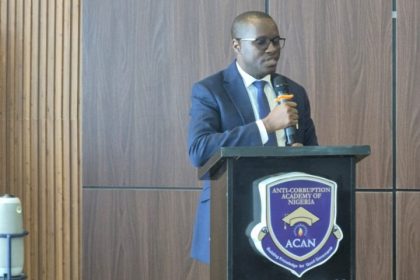


BY EMMA PETER
The Independent Corrupt Practices and Other Related Offences Commission (ICPC) has expanded its preventive anti-corruption campaign in secondary schools with the inauguration of the National Schools Integrity Programme (NSIP) and Students’ Anti-Corruption Clubs (SACs) in five schools in Oyo State.
The exercise, held on Thursday at Koso Community Grammar School, Iseyin, was part of activities marking the school’s 50th anniversary and brought together government representatives, traditional rulers, teachers, alumni and students.
Speaking through a video message, the ICPC Chairman, Dr. Musa Adamu Aliyu, congratulated Koso Community Grammar School on attaining its Golden Jubilee, describing the occasion as an opportunity to reflect on the institution’s contribution to the development of generations of students.
Aliyu explained that although the Commission is recognised for its investigative, preventive and enforcement responsibilities, sustainable progress in the fight against corruption also depends on developing positive values among young people.
According to him, the NSIP is intended to equip students with “the values, knowledge and courage to recognise, reject and resist corrupt practices.”
He noted that corruption should not be viewed only in terms of the diversion or misuse of public resources, stressing that practices such as examination malpractice, bribery, cheating, dishonesty, deception and abuse of trust also undermine society.
The ICPC chairman said the newly established clubs would provide platforms for students to participate in continuous activities focused on integrity and responsible conduct. He added that participants could subsequently progress to Anti-Corruption Vanguards at tertiary institutions and later join Anti-Corruption Community Development Service (CDS) groups established in collaboration with the National Youth Service Corps (NYSC).
Aliyu urged students to shun dishonest shortcuts, saying the programme was designed to help them develop the confidence to make ethical decisions rather than frighten them with stories about corruption.
“A certificate obtained through dishonesty cannot build a successful nation,” he said.
The choice of Koso Community Grammar School for the launch also reflected the ICPC’s MAMMILL initiative, meaning My Alma Mater, My Integrity Legacy. The school is the alma mater of the Commission’s Director of Public Education, Mr. Demola Bakare, FSI.
Addressing the students, Bakare recalled his own experience as a student of the institution, saying his time at Koso demonstrated how the classroom could provide the foundation for future service to the nation.
He encouraged the students to work diligently towards their ambitions, avoid examination malpractice and cheating, and understand that academic qualifications must be matched by sound character.
Bakare further urged them to remain committed to their aspirations and reject shortcuts that could compromise their future.
The President of the Alumni Association, Chief Taofeeq Adegboyega Adeyoke, FCA, in his welcome address, expressed appreciation to the Oyo State Government, traditional institution, teachers and members of the alumni association for their contributions to the school.
He said the institution, established in 1976, had produced graduates who had made contributions to public service, the military, industry and academia, while appealing for continued support for its development.
The Principal of the school, Mr. Raheem Sule Ademola, also acknowledged the contributions of the alumni association and called for additional assistance to address some of the school’s infrastructure needs.
He identified perimeter fencing, an auditorium and science laboratory equipment among the areas requiring further support.
Ademola also charged the students to remain committed to their studies, pursue academic excellence and protect the reputation associated with the school.
The ICPC reaffirmed its commitment to preventive anti-corruption education through the NSIP, SACs and MAMMILL initiatives, while congratulating Koso Community Grammar School on its 50th anniversary.
The Commission stressed that effective integrity education requires sustained cooperation among schools, parents, alumni associations, government institutions and communities to raise young Nigerians who value honesty, accountability and responsible citizenship.