

BY EMMA PETER, ABUJA
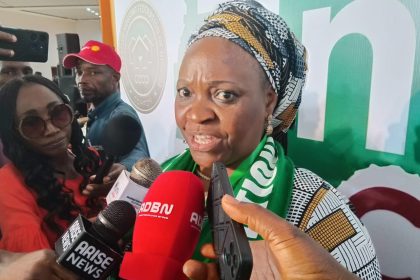
President of the Cooperative Federation of Nigeria (CFN), Mrs. Mershak Hannatu Padi, has called for stronger financial access for women cooperators, stressing that deliberate reforms in the cooperative sector are essential to improving livelihoods, promoting peace and accelerating Nigeria’s economic transformation.
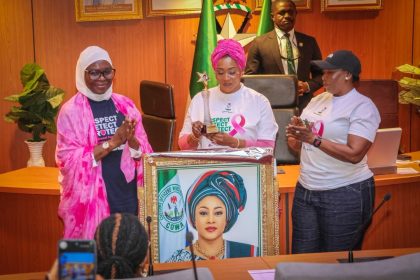
Padi made the call in Abuja while speaking at the 10th National Cooperative Summit, Exhibition and Awards, organised by the Cooperative Federation of Nigeria and held from October 6 to 9, 2026, at the Maryam Babangida National Centre for Women Development.
The summit, themed “Cooperative Reform: Unlocking Cooperative Potential for Peace, Sustainable Development and Economic Transformation,” also featured a side event on “Youth and Women in Cooperatives.”
Padi, who is the first female president of the CFN to host the National Cooperative Summit since the federation was established in the mid-1960s, said her administration would prioritise initiatives capable of improving the welfare and economic opportunities of cooperative members, particularly women.
She identified access to finance as one of the major challenges confronting women and said the federation would engage relevant regulators and stakeholders to make financing opportunities easier and faster for women cooperators.
“As you are aware, in the course of this engagement, there is going to be a forum for the women, and we are going to use that opportunity to share the common things that affect us, especially access to finances, because that is a great challenge to many women,” Padi said.

She added that the federation would work with regulators to explore ways of making financial access more accessible to women, enabling them to improve and expand their businesses.
The CFN president also linked the cooperative model to peace and sustainable development, saying the system encourages members to pool resources together to improve their livelihoods and pursue common interests.
According to her, when members have a stake in their cooperatives and work together towards common progress, it promotes stability and creates an environment conducive to peaceful coexistence.
“Cooperative is about self-help. When we pool our resources together and we are able to do the things that help us improve our livelihoods, in cooperative everyone has a stake,” she said.
Padi said the federation expected the knowledge-sharing and discussions at the summit to translate into improved practices across cooperative societies nationwide.
She urged cooperative leaders and members to return to their various organisations with new ideas from the summit and use them to improve their operations and positively impact the lives of their members.
The summit also provided an opportunity for the Federal Government to outline ongoing reforms aimed at repositioning the cooperative sector as a stronger contributor to the Nigerian economy.

The Minister of State for Agriculture and Food Security, Senator Dr. Aliyu Abdullahi, said the government was working on a digital registration and identification system for cooperative societies and their members
He explained that the reform would involve the registration of cooperatives, the assignment of Cooperative Verification Numbers to societies and the introduction of Cooperative Identification Numbers, known as Coop ID, for members.
According to him, the digital system would help address fraudulent practices in the cooperative sector and strengthen accountability.
He said the government was also working with the credit bureau to ensure that individuals who obtain loans from one cooperative society and fail to repay them cannot simply move to another cooperative organisation to access fresh credit without their financial history being known.
Abdullahi said the reform would also focus on professionalising the management of cooperative societies through human-capital development and capacity building.
He stressed that cooperatives operate differently from conventional profit-driven businesses because their primary objective is the welfare of members.

He said the Institute of Cooperative Professionals (ICOPRO) had been approved to help provide the professional capacity required to manage cooperative organisations effectively.
The minister further noted that cooperatives had an important role to play in agriculture and food security, particularly through the mobilisation of agricultural inputs.
He explained that cooperative societies could purchase inputs in bulk and make them available to members at cheaper prices, thereby reducing costs and improving productivity.
Abdullahi said the Federal Government also planned to review the existing cooperative law to bring it in line with modern global cooperative practices.
He said the review would strengthen the cooperative identity and ensure that organisations that do not meet the principles of a genuine cooperative society would not be allowed to use names or abbreviations that could mislead members of the public.
He also disclosed plans to strengthen the apex cooperative body and rehabilitate the National Centre for Cooperative Development to better serve cooperative societies across the country.

Earlier, Padi used the summit to appreciate President Bola Ahmed Tinubu for the attention being given to cooperatives as part of the Federal Government’s economic reform efforts.
She also acknowledged the role of the Minister of State for Agriculture and Food Security in recognising the CFN as the apex body of the Nigerian cooperative movement.
The CFN president recalled the leadership transition that took place at the 9th National Cooperative Summit in Jos, Plateau State, in 2025, where she emerged president following an election conducted under the leadership of the late High Chief Tajudeen Oriyomi Ayeola.
Padi also paid tribute to Ayeola, who died on December 25, 2025, describing him as a committed and selfless leader who contributed significantly to the growth, unity and development of the cooperative movement.
She said the federation was also working to strengthen its national representation, noting that Bauchi State had reconnected with the federation and efforts were underway to mobilise cooperatives in the North-East and conduct an election to ensure the zone takes its rightful place in the federation’s leadership.
The summit brought together cooperative leaders, government officials, development partners, women and youth representatives and other stakeholders to deliberate on reforms capable of unlocking the potential of the cooperative sector for national development.