
BY EMMA PETER, ABUJA
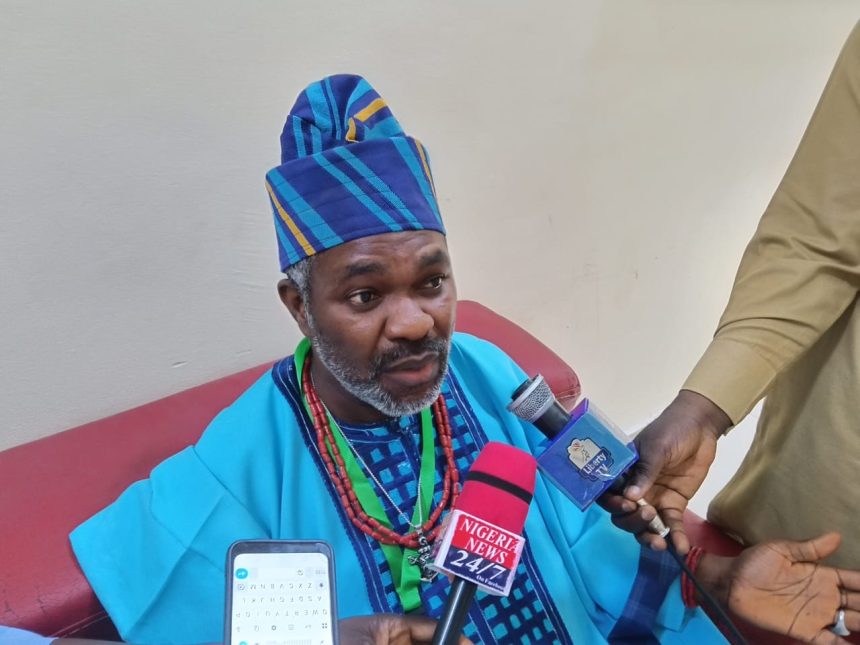
Dr. Doyin Johnson, a member of the Governing Council of the Federal University of Agriculture, Basambiri, Bayelsa State, and Director-General of the National Coalition of Tinubu Support Groups (NCTSG), has called for sustained support for President Bola Ahmed Tinubu, arguing that the administration’s reforms are aimed at rebuilding the foundations of the Nigerian economy and public institutions.
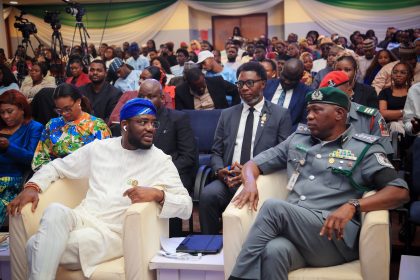
Johnson made the remarks on Tuesday, September 29, 2026, at the FOGOCOM-TSG National Conference in Abuja, organised by the Forum of Governing Council Members in Nigeria Tertiary Institutions in collaboration with the Tinubu Support Group.
The conference, themed “Empowering Tertiary Institutions for National Transformation: The Governing Council Role in Realising the Renewed Hope Agenda,” brought together stakeholders in Nigeria’s tertiary education sector to discuss institutional governance, leadership, development and national transformation.
The conference also featured President Bola Ahmed Tinubu, Minister of Education, Dr. Maruf Tunji Alausa, Director-General of the Progressive Congress Presidential Campaign Council for the 2027 general election, Senator Abdulaziz Yari, and Deputy Director-General of the campaign council, Rt. Hon. James Abiodun Faleke, among personalities displayed on the conference banner.
FOGOCOM had earlier announced that the conference would provide a platform for stakeholders from government, academia, industry and development agencies to deliberate on tertiary education, governance, leadership development, institutional effectiveness and sustainable national growth.
The forum has also publicly stated its support for the Renewed Hope Agenda and mobilisation ahead of the 2027 general election.
Speaking on the political significance of the gathering, Johnson said members of the support groups had a responsibility to explain to Nigerians why they believe President Tinubu deserves another term.
“We are representing him, we are serving. So automatically, if we are representing him, we should be able to tell the world why he needs to be re-elected. So that’s what we are doing today,” he said.
Johnson said his support for Tinubu was based on what he described as reforms in public financial management, education and the wider economy.
Using the financial management system in federal institutions as an example, he argued that the introduction of more centralised and electronically monitored processes had made it more difficult for public funds to be diverted.
“As a governing council member, in all federal government institutions, institutions of government, both presidency, before any money goes out, the Accountant General must approve it,” he said.
He explained that at the Federal University of Agriculture, Basambiri, financial requests pass through several stages of approval, with the Accountant-General’s office monitoring the process.
“How do you want to steal money?” Johnson asked, arguing that the system was helping to strengthen accountability in the management of public funds.
He also pointed to the Treasury Single Account and related financial-control mechanisms as part of what he considers significant changes under the Tinubu administration.
His broader claim was that the reforms had reduced opportunities for government revenue to be kept outside the central public-finance system.
Johnson further defended the administration’s decision to reform fuel subsidy arrangements, saying that, in his view, previous subsidy structures created opportunities for abuse.
He acknowledged that Nigerians were experiencing economic difficulties but compared the situation to the temporary pain associated with pregnancy before childbirth.
“The country is not too good now. It’s like when a woman is pregnant, automatically she will pass through a lot of pain, stress, and all stuff like that. But when they give birth to a baby, the joy comes,” he said.
He expressed optimism that Nigerians would begin to see greater benefits from the reforms as the administration progresses, while also referring to proposed measures for vulnerable groups, including unemployment and old-age support.
Johnson also linked the administration’s education policies to his argument for continuity, stressing that education should empower citizens rather than make them dependent.
“Education makes people easy to lead, impossible to enslave,” he said, adding that initiatives such as student financing and education loans demonstrated, in his view, an attempt to expand access to education.
The Federal University of Agriculture, Basambiri, where Johnson serves on the Governing Council, is located in Nembe Local Government Area of Bayelsa State.
Johnson maintained that his message ahead of the 2027 presidential election was that Nigerians should examine the policies and records of political actors rather than simply follow popular narratives.
While criticising unnamed political opponents and making claims about past administrations, he ultimately declared his support for Tinubu, saying he believed the President was laying what he described as a new foundation for Nigeria.
“I have said it in the past and I’ve been repeating it, the only person that can take this country to the promised land is President Bola Ahmed Tinubu. He will do it. He’s laying a solid foundation,” Johnson said.
He said the country inherited what he described as a “dilapidated foundation” and argued that the present administration was undertaking what he called “engineering work” to rebuild it without allowing the structure to collapse.
Johnson’s comments came against the backdrop of FOGOCOM’s continuing engagement with the education sector and its declared support for the Tinubu administration.
The forum has previously described itself as a platform bringing together governing council members, professionals, policymakers and other stakeholders committed to strengthening tertiary education and national development.
For Johnson, the combination of education reform, public financial controls and economic restructuring forms the basis of his argument for continuity, as he urged supporters to communicate what they see as the achievements of the Renewed Hope Agenda to Nigerians ahead of the 2027 election.