
BY EMMA PETER, ABUJA
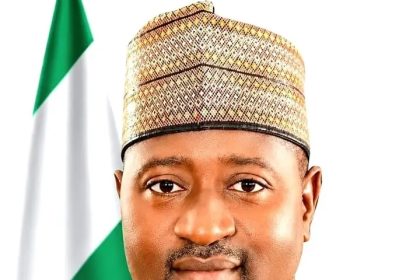
Nasarawa State Governor and Chairman of the North Central Governors Forum, Engr. Abdullahi A. Sule, has highlighted his administration’s efforts to attract investments, create employment opportunities, develop infrastructure and improve residents’ living standards through strategic economic policies.
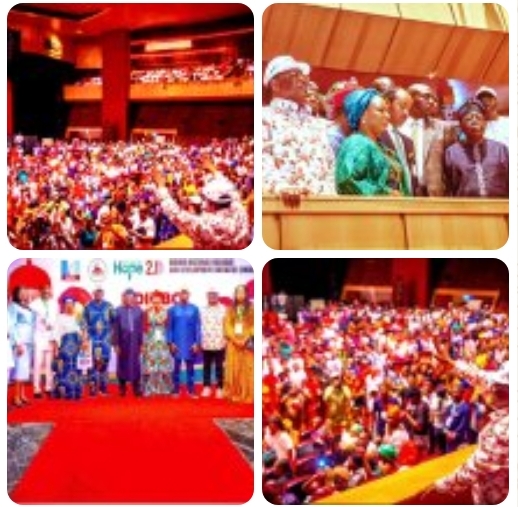
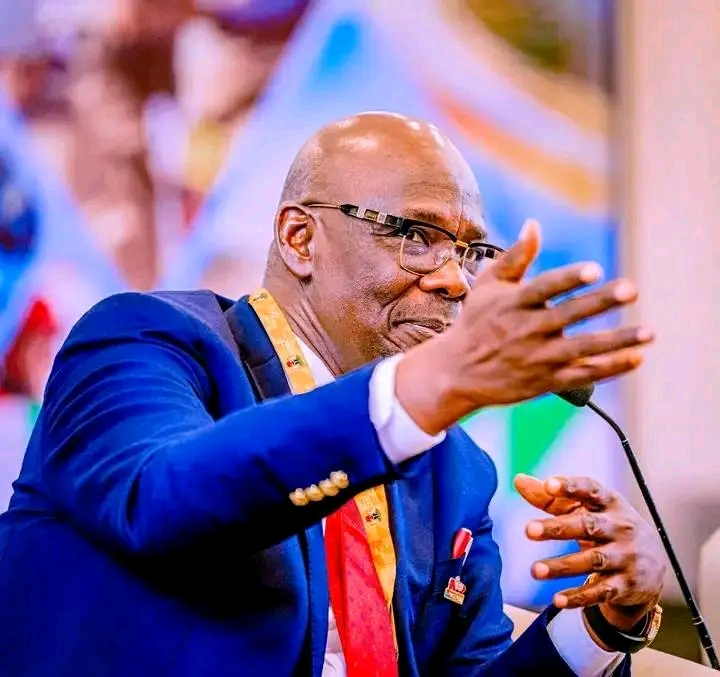
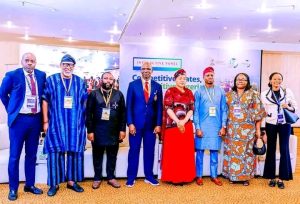
Governor Sule made this known on Tuesday, October 27, 2026, while participating as a panelist at the 32nd Nigerian Economic Summit (NES #32), where he discussed the competitive advantages of states and strategies for translating economic reforms into tangible benefits for citizens.
The governor highlighted achievements recorded by his administration in human capital development, particularly in the healthcare sector, industrialisation, youth employment and the digitalisation of land registration, among other areas.
Speaking on the importance of ensuring that host communities benefit directly from investments, Sule explained how his administration had introduced measures to guarantee that communities receive tangible benefits from economic activities taking place on their land.
He cited an instance involving land acquisition for investment, explaining that an initial offer of about ₦40 million to a community was subsequently increased to several hundred million naira after the developers recognised the community’s expectations and the value of the transaction.
“So, in the process of buying the land, the developer initially offered ₦40 million, and the people were excited about the amount. Then, all of a sudden, when they realised that I was beginning to receive messages about them, they ended up paying the community several hundred million naira,” Sule said.
According to him, the financial benefits generated significant economic activities within the community, enabling more residents to afford major social and personal commitments, including pilgrimages and marriages.
He explained that the impact became evident when residents of the community began to feature prominently among those travelling for the Muslim pilgrimage to Saudi Arabia.
“All of a sudden, when they compiled the list of those going for Hajj, the majority of whom were Muslims, they discovered that most of the people going for Hajj from that local government were from that particular community. That was when I realised that something significant had happened in that area. Marriages also started taking place, and people were able to improve their living conditions,” he said.
The governor, however, said his administration had also introduced a signature bonus arrangement to ensure that host communities benefit from investments in the solid minerals sector.
He explained that, under the arrangement, the state government receives payments from investors and commits 30 per cent of the amount received by the state to community development.
“Just like they do in the oil and gas sector, investors pay us. The first time they came, one investor paid us five million dollars, while another payment was 22 million dollars. I said that we would take 30 per cent of whatever the state receives and give it back to the community,” Sule said.
Rather than distributing the funds directly as cash, Sule said the government engages community members to identify their priority needs and provides the required projects and materials.
“But we will not give them cash. We will ask them, ‘Tell us what you want.’ They may say they want fertiliser, and we will buy it for them free of charge. If they want a hall for town hall meetings, we will build it for them. If they want a primary school, we will provide it. If they want scholarships, we will also provide them. That is how we participate,” he said.
The governor commended Olam Group for its contributions to economic development and stressed the importance of creating an investment environment in which businesses can thrive while surrounding communities benefit from economic activities.
“I want to commend Olam for the wonderful work that they are doing here,” Sule added.
On infrastructure development, Sule highlighted his administration’s ongoing efforts to improve connectivity between Nasarawa State and the Federal Capital Territory, particularly around the Nyanya, Mararaba and Masaka axis.
He explained that traffic congestion along the corridor had discouraged some investors from considering Nasarawa State, prompting his administration to embark on the construction of a flyover to ease movement and improve access to investment opportunities.
“A lot of people wanted to invest in Nasarawa State, but they would tell you that they were afraid of Nyanya, Mararaba and all those areas because of the traffic. So, I asked myself, can you imagine Lagos without the Third Mainland Bridge? That is what we are addressing. We are building what you could describe as a Third Mainland Bridge on land here at Mararaba and Nyanya,” he said.
According to him, the project, which was nearing completion at the time of his remarks, was expected to be delivered by the end of December 2026.
“If you go to Mararaba and Nyanya right now, you will find a flyover stretching close to three kilometres that the Nasarawa State Government is building. I passed through there on my way here because I arrived early today, and the project is almost ready. They have promised that it will be delivered by the end of December,” Sule said.
He observed that improved infrastructure was already contributing to increased property values around Masaka and neighbouring areas, demonstrating how public investment could stimulate private wealth creation and economic activity.
At this point, a participant at the summit loudly praised the governor for the infrastructure development, prompting Sule to use the participant as an example of how rising land values were creating wealth for property owners in the area.
“And right now, just by doing that, the prices of land in Masaka have actually jumped. The man is making a lot of money,” Sule said, referring to the participant who had praised him.
“He has a lot of land in Masaka, and he is making a lot of money. These are the kinds of things that happen. That is how we are taking advantage of infrastructure development,” he added.
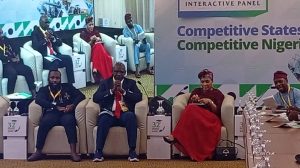
The governor explained that his administration was prioritising infrastructure development and the appreciation of land values rather than immediately focusing on revenue collection through taxation.
“So, for right now, I am not interested in the taxes. I am only interested in improving the value of the place. Maybe the governor who comes after me will use the opportunity to collect taxes as well. That is the way to build value in land,” Sule said.
On local government administration, Sule disclosed that his government had encouraged councils to embrace financial discipline, savings and project execution without depending entirely on state allocations or borrowing.
He said the approach was already yielding results, with local government chairmen using part of their savings to finance and complete projects within their respective areas.
The governor explained that his administration had insisted on financial discipline and savings, despite resistance from some political officeholders.
“We told them that they must have some savings. For us, that is the control we have,” he said.
Sule expressed satisfaction that local government chairmen were increasingly using their savings to execute projects without relying on state government funding or borrowing.
“I am happy to tell you that whenever we go for conventions, at every local government I visit, I commission projects that have been constructed, developed and funded 100 per cent by the local government chairman,” he said.
The governor cited the construction of a new local government secretariat in Akwanga as an example of a project funded entirely by a local government chairman.
“We went and commissioned a brand-new secretariat built by the local government chairman. The secretariat also has space for security agencies and the legislature. Previously, the legislators used to sit in a room like this, but now they have a properly arranged facility,” Sule said.
According to him, the initiative demonstrates how responsible financial management can enable local governments to invest in infrastructure, strengthen grassroots administration and improve service delivery.
“This is what savings are doing for them,” he added.
Sule also disclosed that his administration was encouraging local governments to participate in major development projects through public-private partnership arrangements.
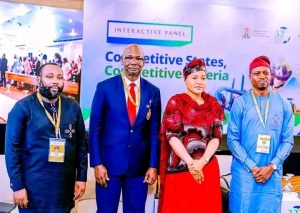
He referenced an ongoing project in which the state government and local government authorities were expected to contribute alongside a private-sector partner to facilitate development and create opportunities for future revenue generation.
Explaining the arrangement, the governor said the state government and participating local governments would contribute funds, while the private-sector partner would provide additional financing required to execute the project.
He said the initiative was intended to create assets capable of generating revenue for the participating local governments and supporting sustainable development.
The governor further said his administration was encouraging local governments to develop portions of available land independently, enabling them to establish assets and sustainable revenue sources that would remain beneficial beyond the tenure of current officeholders.
“About our land, the state government owns the land 100 per cent. But I was telling them, ‘Come, we have only developed about 4,000 hectares of land. Take another 1,000 hectares for the local government and develop it yourselves so that you can own it. Even when you leave office, somebody else will inherit that asset,’” he said.
However, he acknowledged that convincing political officeholders to embrace savings, investment and long-term development planning remained a challenge, noting that some preferred immediate political benefits to the discipline required for sustainable economic growth.
“But as I keep telling you, they do not like it. They think I am a private-sector person because I am bringing private-sector business and money. They believe you have to bring money for politics. Politics is for enjoyment in this world, not in the hereafter,” Sule said.
Despite these challenges, Sule expressed confidence that the approach was gradually gaining acceptance as local government chairmen began to appreciate the benefits of savings and independently funded projects.
He said the chairmen were increasingly proud of projects financed through their own savings, although persuading some of them to embrace the approach remained difficult.
“When we go to commission their projects, they show off and say, ‘This is our project.’ But when you are trying to convince them to do it, that is where it becomes difficult. Nevertheless, things are moving forward, although there are challenges,” he said.
The 32nd Nigerian Economic Summit brought together leaders from government, the business community, development institutions and civil society to align economic priorities, identify practical ways of translating reforms into measurable gains and determine the actions needed to ensure that economic growth delivers meaningful benefits to Nigerians.