

BY EMMA PETER, ABUJA
President Bola Ahmed Tinubu has said Nigeria has significantly reduced its dependence on crude oil revenue, stressing that his administration will continue to pursue policies aimed at building a more diversified and resilient economy.
According to a statement by Stanley Nkwocha, Senior Special Assistant to the President on Media and Communications in the Office of the Vice President, Tinubu stated this on Tuesday in Abuja during the fifth anniversary of the Nigerian Upstream Petroleum Regulatory Commission (NUPRC).
The President, who was represented at the event by Vice President Kashim Shettima, said the Renewed Hope Agenda had helped unlock opportunities in agriculture, manufacturing, digital and creative industries, thereby reducing the country’s reliance on the oil sector.
He said improved collaboration among security agencies, petroleum operators, host communities and the NUPRC had also contributed to more stable and stronger oil production.
According to the statement, the President said the improvement in the sector had encouraged investors who previously left Nigeria to return, adding that the country had ranked first among Africa’s leading destinations for upstream investment for two consecutive years.
Tinubu said the progress recorded in the petroleum sector was important to the wider economy because oil and gas remained critical to energy supply, foreign exchange earnings and government revenue.
“We have already reduced our dependence on oil revenue, and we intend to go further. But a diversified economy still needs energy, foreign exchange and investment, and that is where this sector serves the nation,” he said.
The President said Nigeria’s gas resources would be deployed to power homes and industries, support clean cooking and strengthen economic growth, while petroleum earnings would continue to support the naira and fund the Federation.
He also pledged that his administration would pursue an energy transition suited to Nigeria’s economic and developmental realities.
“This is the decade of Gas. With the largest gas reserves in Africa, we will expand gas supply for power, industry and clean cooking, reduce flaring and methane emissions, and grow renewable energy alongside it,” Tinubu said.
He added that Nigeria would meet its climate responsibilities without compromising development and energy access for its citizens.
The President further assured investors that the Federal Government would uphold the rule of law and the sanctity of contracts, while demanding greater accountability from operators benefiting from government incentives.
He said operators would be expected to meet their commitments on work programmes, local content, environmental protection and host communities, while the NUPRC must remain transparent, independent and accountable in carrying out its regulatory responsibilities.
Tinubu described the Petroleum Industry Act (PIA) as a strong foundation for reforms in the sector but noted that effective implementation remained crucial to attracting investment.
He said his administration had listened to concerns from investors over high costs, lengthy contracting processes and uncertainty surrounding fiscal terms for complex projects.
“Investors told us plainly that good rules were not enough while costs remained high, contracting took too long and fiscal terms for complex projects were uncertain. We listened, and we acted,” he said.
The President charged the NUPRC to ensure that its processes remained clear, timelines reliable and decisions firm, fair and independent, while working with other government agencies to eliminate overlapping regulatory requirements.
He commended the Commission for its achievements within its first five years and urged its management and staff to approach the next five years with the same commitment, integrity and sense of purpose.
Also speaking, the Minister of State for Petroleum Resources, Oil, Senator Heineken Lokpobiri, said the NUPRC had recorded significant achievements in the last five years, attributing the progress to the leadership and reform agenda of the Tinubu administration.
Lokpobiri noted that Nigeria, with crude oil production of about 1.7 million barrels per day and more than 37 billion barrels of oil reserves, still required increased investment, additional licensing rounds and intensified exploration to unlock the full potential of its petroleum resources.
He urged the Commission to sustain its achievements by adopting decisive regulatory measures and eliminating bureaucratic bottlenecks that could discourage investment.
The Chairman of the NUPRC Governing Board, Senator Magnus Abe, said the establishment of the Commission under the PIA demonstrated Nigeria’s progress in reforming the oil and gas sector.
Abe attributed the Commission’s achievements to President Tinubu’s leadership and his decision to shield the regulator from political interference, while commending the management and staff for their commitment to transparency, professionalism and operational efficiency.
Similarly, the Chairman of the Senate Committee on Gas, Senator Jarigbe Agom Jarigbe, said reforms introduced through the PIA had improved transparency, regulatory certainty and investment inflows into the oil and gas sector.
He expressed the National Assembly’s satisfaction with the performance of the NUPRC, particularly its contribution to operational efficiency and greater certainty for investors.
Representing the Minister of State for Petroleum Resources, Gas, Ekperikpe Ekpo, the Permanent Secretary in the Ministry, Mrs. Patience Oyekunle, said the establishment of the NUPRC under the PIA had transformed Nigeria’s petroleum industry.
She said the separation of policy, commercial and regulatory responsibilities under the new framework had strengthened regulatory stability, while expressing optimism that the reforms would lead to increased production and greater value for investments.
The anniversary featured the presentation of awards to former Directors of the Department of Petroleum Resources (DPR), which was transformed into the NUPRC, in recognition of their contributions to reforms in Nigeria’s upstream petroleum sector.
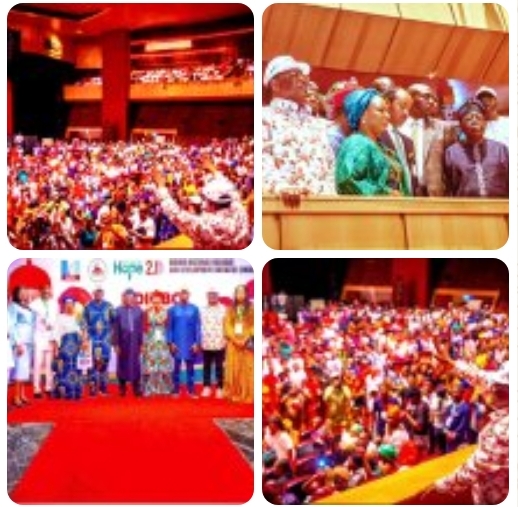
The event brought together stakeholders from the petroleum industry, government institutions and the National Assembly to review the NUPRC’s five-year regulatory journey and discuss strategies for increased investment, production and value creation in the upstream sector.