
BY EMMA PETER, ABUJA
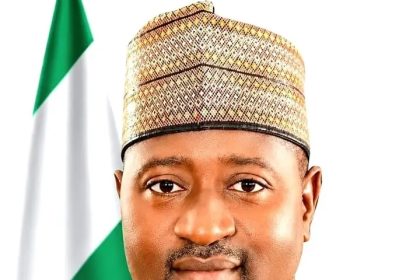
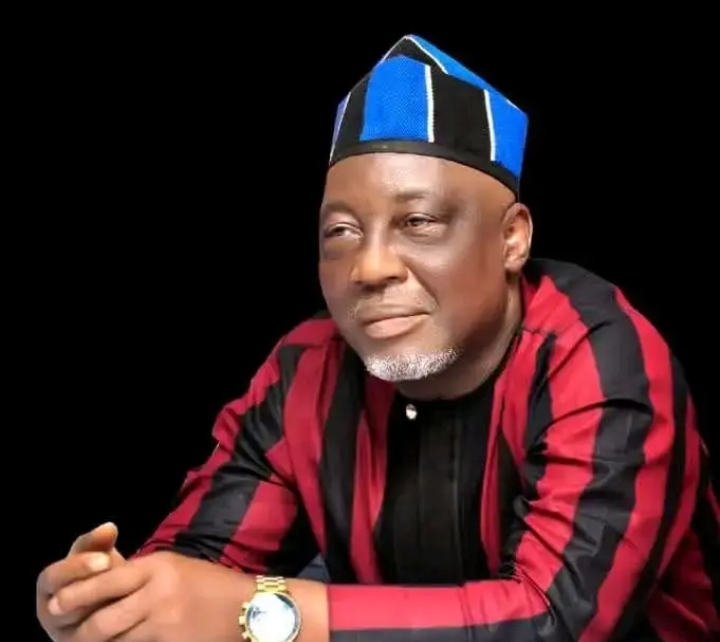
Senator Patrick Abba Moro’s political journey is one that has taken him from the classroom and organised labour to local government administration, university governance, the Federal Executive Council and, ultimately, the National Assembly, where he currently serves as Senator representing Benue South Senatorial District and Minority Leader of the 10th Senate.
Born on July 3, 1958, Abba Moro hails from Okwungaga in Ugbokolo District of Okpokwu Local Government Area of Benue State. His early education took him through LGEA Special Primary School, Odessassa, Ugbokolo, Emmanuel Secondary School, Ugbokolo and Federal Government College, Kano, where he obtained his Higher School Certificate in 1976.
He proceeded to the University of Lagos, where he studied Political Science and graduated in 1980, before obtaining postgraduate qualifications in Public Administration. He began his professional career as a lecturer at Benue State Polytechnic, Ugbokolo, in 1983, rising through academic and administrative responsibilities while also becoming involved in staff union activities.
Those formative years in academia, organised labour and institutional administration provided the foundation for his eventual entry into politics.
Moro’s transition into elective politics was gradual and rooted in grassroots engagement. He contested for the chairmanship of Okpokwu Local Government Area several times before eventually emerging chairman in 1998. He subsequently became Chairman of the Association of Local Governments of Nigeria, ALGON, serving from 1999 to 2006, according to his National Assembly profile.
He later moved into university governance, serving as Pro-Chancellor and Chairman of the Governing Council of Michael Okpara University of Agriculture, Umudike, from 2008 to 2009, and subsequently as Pro-Chancellor and Chairman of the Governing Council of the Federal University of Agriculture, Makurdi, from 2009 to 2011.
In 2011, he entered the Federal Executive Council when he was appointed Minister of Interior under the administration of President Goodluck Jonathan, serving until 2015. The appointment gave him experience at the federal executive level before his return to electoral politics.
 8
Moro returned to the political arena in 2019 when he contested the Benue South senatorial seat on the platform of the Peoples Democratic Party. He won the election and retained the seat in 2023, beginning his second consecutive term in the Senate. His influence within the National Assembly subsequently expanded when he emerged Minority Leader of the 10th Senate.
The position places him among the principal officers of the chamber and gives him responsibilities extending beyond his senatorial district, while his constituency mandate remains focused on the nine local government areas that make up Benue South—Apa, Ado, Agatu, Obi, Ohimini, Ogbadibo, Oju, Okpokwu and Otukpo.
For constituents, however, the most visible measure of Moro’s Senate years has been the projects and interventions attributed to his representation, covering roads and bridges, education, healthcare, water, electricity, agriculture, youth and women empowerment.
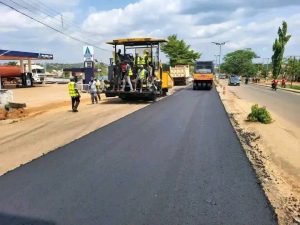
On roads and bridges, documented interventions include Igaluwa Road, Alheri Street and Ochoga Avenue in Otukpo; rehabilitation of Hospital/Odiapa Road in Obi; Ojapo-Ogege Road in Okpokwu; and several rural roads linking communities in Obi, Oju, Ohimini, Agatu and Ogbadibo.
Bridge projects reported under the constituency interventions include Odaburu Bridge in Ogbadibo, River Ogbadibo Bridge in Otukpa, Ikpochi-Okpudu Bridge in Itabono, Ogbadibo, Oru Bridge in Oju and the Umabe-Akpali, Ohimini and Ottaklaja river bridges along the Aikpla-Ihilikpa axis.
Another major infrastructure intervention is the reconstruction of the long-abandoned Otukpo-Obi-Oju Federal Road, a 51-kilometre route connecting communities in Otukpo, Obi and Oju. Work on the road was flagged off in November 2024.
Education has equally featured prominently. Reported interventions include classroom blocks at Ojantelle and Oba in Apa, Ogi in Ado, Otukpa in Ogbadibo and communities in Okpokwu, alongside the National Open University of Nigeria study centre in Ugbokolo.
Beyond physical infrastructure, Moro has pursued legislation aimed at creating permanent educational institutions. He sponsored the bill establishing the Federal University of Health Sciences, Otukpo, while also sponsoring legislation seeking the establishment of the Federal College of Agricultural Technology, Opialu-Ojapo, Benue State. Both initiatives are directly connected to human-capital development in the district and wider state.
Healthcare has also been a significant part of the constituency programme, with reported primary healthcare centres in communities across Okpokwu, Ohimini, Ado, Oju, Obi, Otukpo, Agatu and Apa. Other interventions include medical equipment and drugs, health outreach programmes and support for selected primary healthcare facilities.
In 2026, Moro commissioned a newly constructed and equipped Primary Healthcare Centre at Udegi-Ito in Obi Local Government Area, while also commissioning a PCI water project at Okpoga in Okpokwu.
Water supply has featured through borehole projects across Agatu and other communities, boreholes at traditional palaces in Oju and Obi, rehabilitation of the PCI waterworks at Okpoga, solar-powered boreholes in Otukpo and a water-treatment project at Upu.
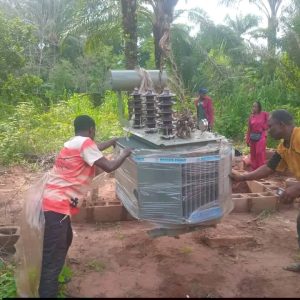
Electricity and rural electrification constitute another area of intervention, with reported projects in communities across Okpokwu, Ado, Ogbadibo and Apa, alongside transformer installations and solar-powered streetlights. Communities mentioned in project records include Olaidu/Ojigo and Ichama in Okpokwu, Ikpemgbe in Ado, Ago and Otto in Ogbadibo, and Auke and Edikwu-Ankpali in Apa. Solar streetlights have also been reported in Orokam and Igumale.
Women and youth empowerment have also formed part of the constituency programme, with reported distribution of sewing machines, grinding machines, motorcycles, agricultural support and other empowerment items. Youth-focused initiatives have included ICT training, provision of laptops, agricultural value-chain training and start-up support.
In communities affected by insecurity and displacement, particularly in Agatu, reported interventions have included medical equipment, boreholes, solar streetlights and motorcycles for youths.
Agriculture has similarly featured through farmer support and agricultural value-chain programmes, reflecting the importance of farming to the local economy of Benue South.
Beyond constituency projects, Moro’s legislative record has become an important part of his representation. The Federal University of Health Sciences, Otukpo, Federal College of Agricultural Technology, Opialu-Ojapo and the North Central Development Commission legislation are among the major initiatives he has identified as important outcomes of his Senate tenure.
His role as Minority Leader has also provided a larger platform to raise national issues, particularly governance, development and insecurity. He has repeatedly raised concerns over attacks in Benue and other parts of the country and participated in Senate interventions seeking stronger action on security.
As the 2027 political season approaches, Moro’s political future is increasingly being discussed around the record of his two terms in the Senate and the question of whether ongoing projects and legislative initiatives should be consolidated.
Moro has indicated his intention to seek another term under the Peoples Democratic Party. His argument for another term has centred on continuity, experience and the need to complete or consolidate projects and legislative initiatives across Benue South.
At a campaign flag-off in Otukpo in September 2026, Moro said 110 constituency projects had been executed across the nine local government areas and that another 22 projects had been facilitated and captured in the 2026 Appropriation Act. He also presented his legislative record as part of the basis for seeking another term.
The 110-project figure was presented by Moro and his campaign organisation as part of his scorecard, and therefore represents a claim from the candidate’s camp. The broader project records, however, show interventions across all nine local government areas and multiple sectors.
This geographical spread is one of the notable features of his constituency record. From Apa to Ado, Agatu, Obi, Ohimini, Ogbadibo, Oju, Okpokwu and Otukpo, the reported interventions cover roads, bridges, education, healthcare, water, electricity, agriculture and empowerment.

For supporters of his return, the central argument is that the experience accumulated through his years in academia, local government, university administration, federal executive service and the Senate gives him the background to pursue further development and consolidate ongoing projects.
Moro’s political résumé is nevertheless extensive. He has served as a lecturer, local government chairman, ALGON chairman, university governing council chairman, Federal Minister and senator, and now occupies one of the principal leadership positions in the Senate.
From the classroom in Ugbokolo to the National Assembly in Abuja, his political journey has therefore passed through several layers of Nigerian public life. His Senate years have added another chapter, characterised by legislative initiatives and constituency interventions spread across the nine local government areas of Benue South.
As the district moves toward 2027, Moro is presenting that record, together with his experience as Minority Leader, as the foundation for his campaign for another term.
What remains central to Moro’s political story is the progression from grassroots politics to national legislative leadership, and his continuing effort to link his position at the centre with development interventions in the communities he represents.
Written by Emma Peter, Journalist based in Abuja. For your Editorial, feature and advertisment please contact us: oxfordreporters52@gmail.com / 09152514499 or 08133940546