
By Oxford Reporters
The Executive Chairman of the Economic and Financial Crimes Commission (EFCC), Ola Olukoyede, has charged religious leaders across Nigeria to take a more active role in the fight against corruption by ensuring that their sermons and teachings promote integrity, accountability and honest living.
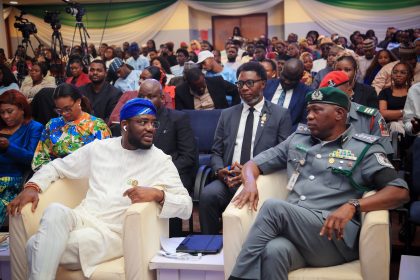
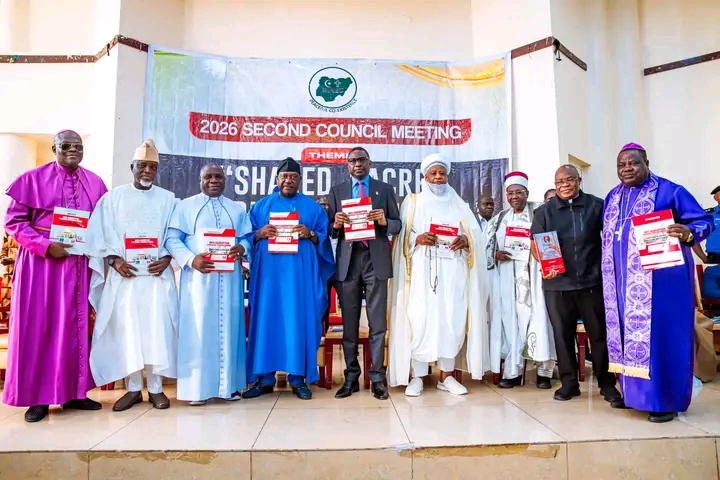
Olukoyede gave the charge on Wednesday, September 23, 2026, in Abuja at the second 2026 Council Meeting of the Nigeria Inter-Religious Council (NIREC), where the Anti-Corruption Interfaith Manual for Christian and Muslim religious leaders was launched.
The meeting, which had the theme, “Shared Sacred Flourishing in Nigeria,” brought together senior Christian, Muslim and traditional leaders to deliberate on the role of faith communities in promoting peace, justice and national development.
Speaking at the event, Olukoyede said the fight against corruption could not be left to law enforcement agencies alone, stressing that religious institutions possessed the moral authority and influence required to shape the character and values of citizens.
He said the wellbeing of Nigerians depended largely on the actions and choices of individuals, adding that corruption undermines the collective good by allowing individuals to appropriate resources meant for society.
“Corruption privatizes what is shared, converts the commonwealth into private advantage, and allows one person to flourish by making many others poorer,” Olukoyede said.
According to him, the EFCC’s responsibility was not only to investigate and prosecute financial crimes but also to work with institutions capable of preventing corruption by shaping positive values.
He urged religious leaders to consistently teach their followers that corruption, fraud and the unlawful acquisition of wealth were incompatible with the teachings of both Christianity and Islam.
“We believe that no religion condones corruption and no faith entertains fraudulent engagements,” he said.
Olukoyede disclosed that the EFCC had, over the years, engaged Christian and Muslim leaders through its interfaith framework to identify relevant teachings on corruption and translate them into practical messages that could be communicated to worshippers.
He said the newly launched manual was developed through consultations with leaders of both faiths and contained doctrinal positions from the holy books on corruption and ethical conduct.
“We are using this opportunity to launch the Manual which we hope our religious leaders will surely find useful in preaching anti-corruption messages to their members,” he said.
The EFCC chairman stressed that corruption and financial crimes had no religious, ethnic or regional boundaries, warning that the consequences were ultimately borne by the entire society.
“Financial crime has no religion. Corruption has no tribe. Fraud does not become Christian or Muslim because of the identity of the person accused of committing it,” he said.
He explained that when public resources were stolen, the consequences could be seen in poorly equipped hospitals, inadequate infrastructure, unemployment and other challenges that affect citizens irrespective of their religious affiliations.
“When public money is stolen, both Christians and Muslims suffer. A badly equipped hospital does not first ask a dying patient where he worships. A collapsed road does not distinguish between a Christian traveller and a Muslim traveller. Unemployment does not respect denomination. Inflation does not spare one faith community,” Olukoyede said.
He therefore called on pastors and imams to make the manual part of their regular teachings and help their followers understand why corruption was not only a criminal offence but also a moral issue with far-reaching consequences for society.
Olukoyede further challenged religious institutions to confront the culture of celebrating wealth without questioning its source.
“Religious institutions have extraordinary responsibility in Nigeria’s anti-corruption struggle. The EFCC can investigate a person’s conduct. Faith communities can influence that person’s character. We can prosecute fraud. Religious teaching can cultivate honesty.
“We can confiscate illicit wealth. Churches and mosques can challenge the values that make society worship wealth without questioning its source. We can punish corruption after the event. Faith can help prevent it before it begins,” he said.
Also speaking, the Executive Secretary of NIREC, Professor Cornelius Afebu Omonokhua, said the second edition of the anti-corruption preaching and teaching manual was facilitated through the Interfaith Anti-Corruption Advisory Committee (IAAC) of the EFCC.
Omonokhua said the manual, alongside facilitators’ guides, was designed to assist Christian and Muslim leaders in presenting authentic religious teachings against corruption while promoting peaceful coexistence.
He thanked the EFCC chairman for providing leadership in the anti-corruption campaign and described the manual as an important guide for religious institutions.
“No nation can flourish in the face of corruption at all levels,” Omonokhua said.
He argued that religious leaders must ensure that their personal conduct reflected the teachings they preach, noting that corruption within religious circles could undermine public confidence in faith institutions.
Speaking on behalf of President Bola Ahmed Tinubu, the Secretary to the Government of the Federation, Senator George Akume, said Nigeria’s diversity of faiths remained an important national asset that should be used to promote unity rather than division.
Akume, who decried the security challenges confronting the country, listed violence, banditry, kidnapping, communal clashes and terrorism among the threats affecting communities across Nigeria.
“Our nation is still passing through diverse challenges. Violence, orchestrated by criminal activities, banditry, kidnappings, communal clashes, terrorists’ activities have left wounds in our dear country. In several places, parents are afraid to let their children go to school,” he said.
He assured Nigerians that the Federal Government remained committed to protecting lives, livelihoods and the dignity of citizens.
“This government will not relent until every Nigerian can live, work, travel and pray in safety,” Akume said.
He called on religious and community leaders to complement government and security agencies by speaking with one voice against terrorism, banditry and other forms of criminality.
“All religions must condemn in a very strong way the barbaric practice of banditry and terrorism because they debase humanity,” he said.
The event was attended by prominent Christian, Muslim and traditional leaders, including the President of the Christian Association of Nigeria (CAN), Reverend Daniel Okoh; the Sultan of Sokoto, Alhaji Muhammad Sa’ad Abubakar; former JAMB Registrar, Professor Ishaq Oloyede; the Emir of Zazzau, Alhaji Ahmed Nuhu Bamalli; and the Shehu of Borno, Abubakar Umar El-Kanemi, among others.
The launch of the manual marked another step in efforts to deepen collaboration between Nigeria’s religious institutions and anti-corruption agencies, with religious leaders being encouraged to use their considerable influence to promote integrity, accountability and responsible citizenship.