
By Emma Peter
The Economic and Financial Crimes Commission (EFCC) and the United States Federal Bureau of Investigation (FBI) have agreed to strengthen cooperation in investigating alleged financial impropriety involving funds released under United States-supported development programmes.
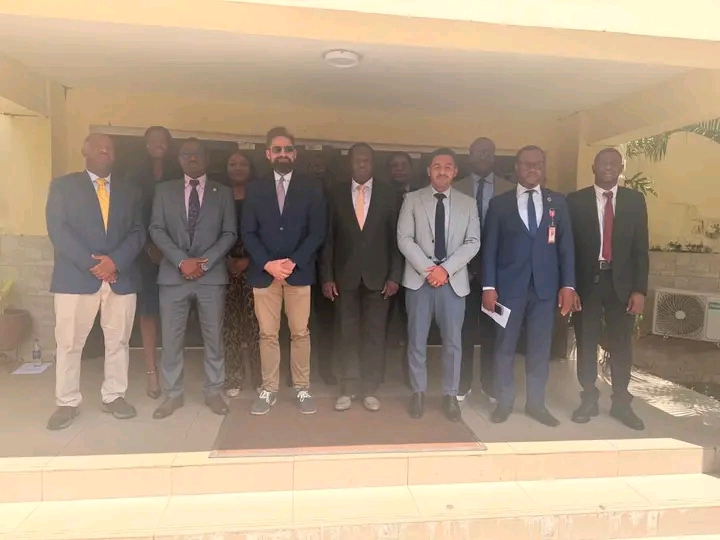
According to the report, the commitment was reached on Thursday, September 10, 2026, when a delegation from the FBI visited the Lagos Zonal Directorate 2 of the EFCC.
The FBI delegation was led by Macus Maccain, Assistant Law Enforcement Attaché, while the Acting Zonal Director of the EFCC’s Lagos Zonal Directorate 2, Assistant Commander of the EFCC (ACE I) Bawa Usman Kaltungo, received the team on behalf of the Commission’s Chairman, Ola Olukoyede.
During the meeting, Maccain explained that the engagement was intended to reinforce cooperation between both agencies, particularly in the investigation of suspected financial irregularities involving organisations that received funding through programmes supported by the United States Agency for International Development (USAID).
He said the investigation would focus particularly on programmes associated with HIV and tuberculosis interventions.
Maccain noted that the issue arose after the United States Government discontinued some USAID programmes in 2025, creating concerns about funds that remained in the possession of organisations implementing the affected projects.
According to him, investigations were necessary to determine whether such funds were properly accounted for or were subjected to mismanagement or diversion after the termination of the programmes.
“We are seeking stronger engagement with the EFCC to establish how the funds were managed and identify possible financial misconduct arising from the termination of the programmes,” he said.
Also speaking, Jeremy Kennon, Special Agent with the Office of Inspector General, United States Department of State, said the United States and Nigerian governments had previously collaborated in financing organisations involved in HIV and tuberculosis interventions.
Kennon explained that some of the organisations had established one-stop centres to provide HIV-related treatment and services.
He, however, disclosed that reviews of some of the programmes had raised concerns about inflated budgets and other financial irregularities, including cases identified in Kano State and other parts of the country.
He stressed that the concerns extended beyond Kano and Nigeria, noting that similar issues had been uncovered in other countries.
Kennon expressed the FBI’s interest in establishing a sustained working relationship with the EFCC, particularly through reciprocal intelligence and information sharing.
“We’ll like to work with the EFCC on this on a long-term basis, and we’ll be sharing information with you; not just getting information from you,” he said.
Responding, Kaltungo welcomed the FBI delegation and reaffirmed the EFCC’s readiness to collaborate with United States law enforcement authorities on the matter.
He described the relationship between Nigeria and the United States as a long-standing partnership, especially in the area of law enforcement.
Kaltungo assured the delegation that the EFCC would examine the allegations and trace the movement of the funds to determine their eventual beneficiaries and how they were utilised.
He said the financial trail would help investigators establish whether the funds were used for the purposes for which they were released and determine whether any part of the money was mismanaged or diverted following the termination of the programmes.
The Acting Zonal Director further said the investigation would not be restricted to a particular state, but would cover all locations where the affected organisations and programmes operated.
He added that the EFCC would work closely with the FBI to track the movement of the funds and establish the facts surrounding the alleged financial misconduct.